


The architecture industry is undergoing a revolutionary transformation, driven by the power of Artificial Intelligence (AI). As AI continues to evolve, its ability to process vast amounts of data, optimize designs, and streamline workflows is reshaping the way architects work. This blog will explore the top 10 AI applications in architecture and the leading technologies that are redefining the field. Whether you’re an architect, a technology enthusiast, or someone interested in the future of design, this article provides valuable insights into how AI is making its mark on architecture.
The Architecture Industry Before AI
Before the integration of AI, architecture was a hands-on, manual process. Every step of designing and constructing buildings required meticulous attention to detail and an abundance of time and resources. Let’s take a look at how the industry functioned before AI revolutionized it.
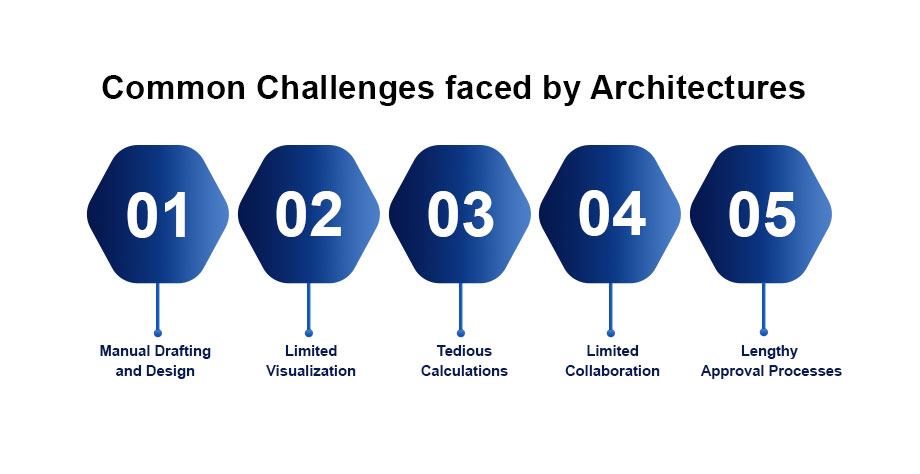
Manual Drafting and Design
Architects traditionally relied on pens, pencils, and rulers to create precise blueprints. The design process was time-consuming and prone to human error. For example, the iconic Fallingwater house, designed by Frank Lloyd Wright, was painstakingly drafted by hand—a reflection of the meticulous craftsmanship that defined architectural design before the digital era.
Limited Visualization
Creating 3D visualizations or models was a challenging and labor-intensive task. Architects had to rely on physical models or 2D drawings to help clients envision the final design. The Guggenheim Museum in Bilbao, for instance, required extensive manual modeling before it became the architectural masterpiece we see today.
Tedious Calculations
Manual calculations were essential for ensuring the structural integrity of a building. Architects and engineers had to meticulously calculate everything from material quantities to structural stability. The construction of the Burj Khalifa in Dubai, for example, involved complex manual calculations to ensure the building’s safety and stability.
Limited Collaboration
Before digital tools, collaboration between architects, engineers, and construction teams involved physical meetings and paper-based documents. This created inefficiencies in information exchange and slowed down project timelines. The Sydney Opera House is a prime example of a project where limited collaboration tools led to delays and cost overruns.
Lengthy Approval Processes
Regulatory approvals were often slow and tedious, requiring architects to navigate layers of bureaucracy. The Empire State Building faced significant delays due to lengthy approval processes, demonstrating how such inefficiencies could hinder project progress.
The Emergence of AI in Architecture
The advent of AI has completely redefined how architects approach their work. AI technologies are not just a trend but a genuine revolution in architecture. In fact, over 90% of architects believe that AI can reshape the industry, according to the American Institute of Architects (AIA). The global generative AI design market was valued at $412.06 million in 2022 and is projected to grow to $7.75 billion by 2032, reflecting the transformative potential of AI.
The integration of AI into architectural workflows has already become a game-changer. Here are some of the most compelling AI applications that are driving this change.
Top 10 AI Applications in Architecture
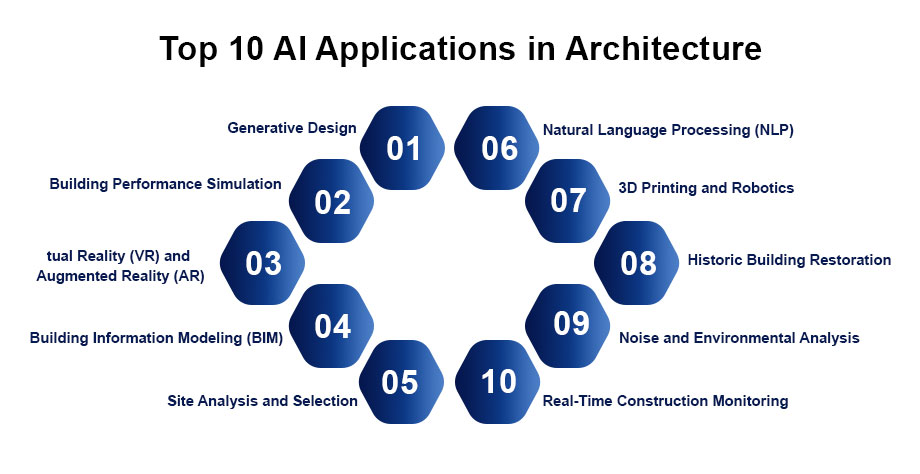
- Generative Design
Generative design is one of the most powerful AI applications in architecture. AI algorithms generate multiple design options based on specified parameters, allowing architects to choose the most efficient and aesthetically pleasing solution.
Benefits:
- AI considers factors such as structural integrity, material efficiency, and energy usage.
- Architects save time by quickly exploring multiple design alternatives.
For example, Skidmore, Owings & Merrill used Autodesk’s generative design tools to optimize the Beijing Greenland Center’s structural integrity and energy efficiency.
- Building Performance Simulation
AI can simulate how a building will perform in real life. These simulations optimize HVAC systems, lighting, and other environmental factors to reduce energy consumption.
Key Features:
- Energy efficiency: AI can suggest optimizations for energy consumption.
- Environmental impact: Architects can assess the building’s overall environmental footprint.
Seattle-based NBBJ used AI-based simulations for the design of Amazon Spheres, improving natural lighting and energy efficiency.
- Virtual Reality (VR) and Augmented Reality (AR)
VR and AR technologies offer immersive design experiences, allowing architects and clients to explore 3D models before construction begins.
Advantages:
- Enhances client engagement by allowing them to “walk through” designs.
- Assists on-site construction workers with real-time data overlays to ensure accuracy.
Zaha Hadid Architects have utilized VR and AR in projects like the Beijing Daxing International Airport, providing clients with an immersive preview of the final design.
- Building Information Modeling (BIM)
BIM integrates architectural, structural, and mechanical data into a single digital model, making it easier to coordinate between teams and reduce errors during construction.
Benefits:
- Clash detection: AI-powered BIM identifies conflicts before construction starts, reducing costly rework.
- Lifecycle management: BIM also supports ongoing building maintenance through predictive analytics.
Gensler used AI-powered BIM to facilitate coordination in the design and construction of the Shanghai Tower, the world’s second tallest building.
- Site Analysis and Selection
AI helps architects select optimal sites for construction by analyzing factors like environmental conditions, soil stability, and accessibility.
Key Benefits:
- Risk mitigation: AI can predict potential risks like flooding or soil instability.
- Urban planning: Optimizes land use and infrastructure development.
Sidewalk Labs, an Alphabet subsidiary, used AI to design Toronto’s Quayside, a sustainable urban community.
- Natural Language Processing (NLP)
NLP algorithms enable AI to understand and process design briefs and client communications. This speeds up documentation and streamlines design workflows.
Key Features:
- Design documentation: Automates the generation of architectural documentation.
- Knowledge sharing: Chatbots powered by NLP help architects access relevant resources quickly.
Architectural firm NBBJ uses NLP-based chatbots to assist its employees in retrieving design knowledge efficiently.
- 3D Printing and Robotics
AI-driven 3D printing and robotics are automating the prototyping and construction process, enabling architects to quickly produce complex designs.
Applications:
- Prototyping: AI can rapidly create architectural prototypes.
- Construction automation: Robots can perform tasks like bricklaying or concrete pouring, improving efficiency.
MX3D, a Dutch company, uses AI-driven robots for 3D printing complex structures, like a steel pedestrian bridge in Amsterdam.
- Historic Building Restoration
AI is also transforming the restoration of historic buildings by analyzing materials, assessing damage, and offering insights into potential restoration methods.
Advantages:
- Material analysis: Helps preserve authenticity while recommending restoration techniques.
- Virtual reconstruction: AI helps recreate missing or damaged architectural elements.
The restoration of Notre-Dame Cathedral in Paris utilized AI to preserve its historical features while maintaining structural integrity.
- Noise and Environmental Analysis
AI evaluates environmental factors like noise pollution, air quality, and microclimates to design more sustainable and healthier spaces.
Key Applications:
- Acoustic design: AI analyzes noise levels and suggests improvements.
- Sustainability: AI helps design buildings that promote better environmental health.
In the King’s Cross development in London, AI played a significant role in designing a sustainable, noise-conscious urban space.
- Real-Time Construction Monitoring
AI-based sensors and cameras can monitor construction sites in real-time, ensuring that projects stay on track and meet quality standards.
Key Benefits:
- Progress tracking: AI tracks construction progress, preventing delays.
- Quality control: Detects construction defects as they occur.
- Safety monitoring: AI ensures site safety by alerting teams to potential hazards.
Construction giant Skanska uses AI to monitor construction sites, improving progress tracking and quality control.
Leading AI Technologies in Architecture
Several cutting-edge technologies are helping architects harness the full potential of AI. Here are some of the leaders in AI for architecture:
- Maket.ai – Creates 3D models and visualizations to turn conceptual designs into tangible structures.
- Arkdesign.ai – An AI tool that generates design options based on architects’ preferences, speeding up the creative process.
- ARCHITEChTURES – Analyzes vast data sets to optimize designs for energy efficiency and sustainability.
- DALL-E 2 – Uses AI to generate imaginative architectural renderings based on textual descriptions.
- Midjourney – A generative design tool that helps architects explore multiple design options for optimal outcomes.
- Spacemaker – Optimizes space utilization in urban planning and real estate development, considering factors like sunlight and airflow.
- Sidewalklabs.com – Uses AI for smarter, more sustainable urban planning, optimizing traffic flow and energy use.
Conclusion
AI is reshaping architecture, offering innovative tools that enhance design efficiency, sustainability, and creativity. From immersive VR experiences to real-time construction monitoring, AI is transforming how architects and designers work, enabling them to create structures that were once only imaginable.
At [Your Company Name], we are at the forefront of AI-powered architectural solutions, helping our clients embrace these technologies for the future of design. Contact us today to learn how AI can elevate your next architectural project.