








Blockchain is neither a miracle nor a scam. It is a specific tool that does a handful of things unusually well and several things badly. Telling those apart is the whole game, and it is where most “blockchain guides” quietly fall down.
The technology is no longer fringe. The global blockchain market sat somewhere between $28 billion and $58 billion in 2025 depending on which analyst you trust, and by some counts 560 to 861 million people now use blockchain or crypto services, roughly 7 to 10 percent of the planet. India ranks first on Chainalysis’s global adoption index. JPMorgan’s in-house blockchain moves more than $10 billion a day.
So the real question is not whether blockchain “works.” It is where it earns its keep and where it just adds friction. Here is the honest ledger: the genuine strengths, the real drawbacks, the energy debate that most articles get wrong, and a simple test for whether your project needs a blockchain at all.
Blockchain in one minute
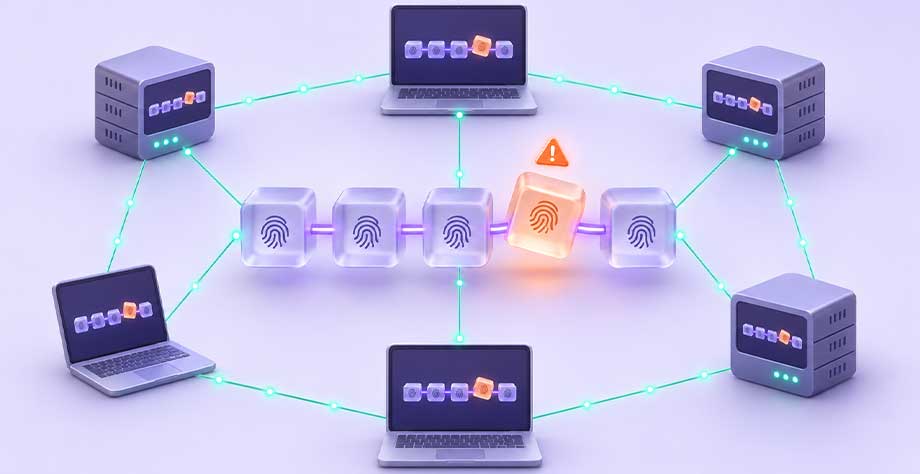
A blockchain is a shared database that no single party owns. Instead of one company keeping the master copy, identical copies live across many computers (called nodes), and new entries are bundled into “blocks” that are cryptographically linked to the ones before them. Change an old record and the chain breaks, so every participant can see the tampering at once.
That design buys one thing above all: agreement without a trusted middleman. Everything blockchain is good or bad at flows from that single trade-off.
Pros vs cons at a glance
| Strengths | Drawbacks |
| No middleman needed to verify transactions | Slow throughput next to centralized systems |
| Tamper-evident, append-only records | Irreversible: no undo for errors, theft, or lost keys |
| Transparent, auditable ledger in real time | Security rests entirely on key management |
| Faster, cheaper cross-border settlement | Proof-of-work chains still burn heavy energy |
| No single point of failure | Patchy, unsettled regulation worldwide |
| Programmable through smart contracts | Costly and complex to build and maintain |
The real pros of blockchain technology
Trust without a gatekeeper
The core advantage is that two parties who do not know each other can transact without routing through a bank, broker, or platform to vouch for them. The network itself does the verifying. That cuts out gatekeepers who charge fees, add delays, or freeze you out, which is why cross-border payments and remittances became blockchain’s first real market.
This is not the same as “no trust required.” You still trust the code and the network. But you stop needing to trust a single company’s honesty and solvency.
Records that resist tampering
Once data is confirmed and buried under later blocks, altering it is close to impossible without controlling most of the network. Each block carries a cryptographic fingerprint of the one before it, so a single edit invalidates everything after it. For audit trails, land registries, and financial records, that tamper-evidence is the entire point: you get a history that is expensive to fake and easy to verify.
Supply chains were an early adopter for exactly this reason. When contaminated produce reaches shelves, tracing it back through paper and email records can take days. On a shared ledger, major retailers have cut the same trace to seconds, because every handoff from farm to warehouse to store is logged and cannot be quietly rewritten after the fact.

Transparency you can actually audit
On a public blockchain, anyone can inspect the ledger. Balances and transactions are visible in real time, a sharp break from the closed books of traditional finance.
One honest correction here, since so many guides get it wrong: public blockchains are pseudonymous, not anonymous. Your name is not attached, but every transaction is permanently visible and tied to an address, and forensic firms routinely trace funds back to real identities. That traceability is a feature for compliance and a warning for anyone assuming privacy.
Faster, cheaper settlement
Traditional bank transfers can take days to clear thanks to intermediaries and batch processing. Blockchain settlement can finish in seconds to minutes, at a fraction of the fee. JPMorgan reported its blockchain payment network handling upward of $10 billion in daily volume in 2025, and more than 130 countries are now exploring central bank digital currencies built on distributed ledgers. Money that used to sit in transit for three days can move in one.
The savings bite hardest on remittances. Traditional providers can take high single-digit percentages on a cross-border transfer, while blockchain rails can shrink that toward a fraction of a percent, which matters enormously to the workers who send billions home to family each year.
No single point of failure
A centralized database has one target: knock out the server and the system goes dark. A blockchain runs across thousands of nodes, so there is no central switch to flip. Take down one node, or a hundred, and the ledger keeps running. For systems that cannot afford downtime or a single hackable vault, that distribution is a real structural advantage.
Programmable money and agreements
This is the strength most “pros and cons” articles skip, and it may be the biggest. Smart contracts are programs that live on the chain and run automatically when conditions are met: release payment when a shipment scans as delivered, pay an insurance claim when a verified flight is cancelled, split royalties the instant a track sells. No lawyer, no manual processing, no waiting. This programmability is what turned blockchain from a payment rail into a platform for entire applications.
Decentralized finance is the clearest proof. Lending, trading, and interest-bearing accounts now run as smart contracts with no bank staffing them, holding tens of billions of dollars at any given time. The same logic powers escrow that releases itself when terms are met, tokenized assets that pay out on a set schedule, and digital collectibles that route a cut back to the original creator on every resale.
The real cons of blockchain technology
It is slow, and that is structural
Public blockchains trade speed for decentralization. Bitcoin handles roughly 7 transactions per second and Ethereum’s base layer about 12 to 25, while Visa can process tens of thousands. Newer chains like Solana hit hundreds to low thousands per second in real use, and “layer 2” networks batch transactions to speed things up, but raw throughput still trails centralized systems. Engineers call this the blockchain trilemma: you can optimize for speed, security, or decentralization, but pushing hard on one tends to cost you another. Be skeptical of headline speed claims too, since independent trackers have found some networks quote peak numbers their real traffic never approaches.
Irreversible cuts both ways
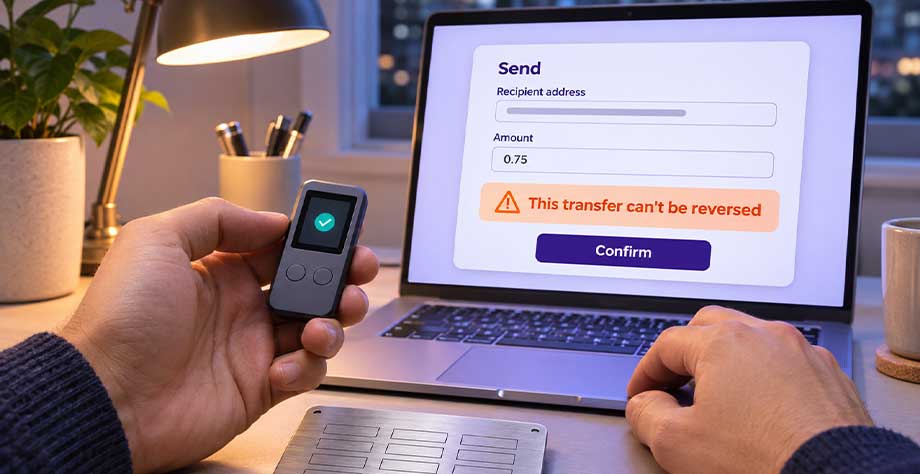
The same immutability that protects records also means there is no undo button. Send funds to the wrong address, get phished, or mistype a transaction, and it is final. Lose your private key and the assets are simply gone. Analysts estimate that 2.3 to 3.7 million Bitcoin, up to a fifth of everything ever mined, is permanently locked in wallets no one can open. There is no bank to call, no password reset, no chargeback. For consumers used to fraud protection, this is a genuine downgrade.
Your security is only as strong as your keys
Blockchains themselves are rarely broken; the cryptography holds. What gets breached is key management. Of roughly $16.7 billion lost across crypto hacks to date, about 40 percent traced to stolen private keys rather than any flaw in the underlying protocol, according to DeFiLlama figures reported by CoinDesk. The 2025 Bybit hack alone drained around $1.5 billion. A private key is not a password you can reset; whoever holds it controls the assets, full stop. That shifts an enormous security burden onto users and operators, and it is unforgiving.
Energy, for the chains that still mine
Some blockchains consume serious electricity, but this is now a chain-by-chain question rather than a blanket flaw. Bitcoin still runs on proof-of-work mining, which by some estimates draws close to 1 percent of all US electricity. That is the environmental cost critics rightly point to. The important nuance, covered in full below, is that most of the ecosystem has already moved past this model.
Regulation is unsettled
Rules are inconsistent and still forming. The EU rolled out its MiCA framework, but there is no harmonized global standard, and the treatment of tokens, smart contracts, and digital assets varies wildly between countries. For a business, that means real compliance risk: what is permitted today may be restricted tomorrow, and operating across borders multiplies the uncertainty. Regulatory ambiguity remains one of the most cited brakes on enterprise adoption.
It is expensive and complex to build
Blockchain talent is scarce and costly, integration with existing systems is fiddly, and running a network carries ongoing overhead. For plenty of problems, a well-run conventional database is cheaper, faster, and easier to maintain. Adopting blockchain because it is fashionable, rather than because the problem demands it, is how companies burn budgets on a solution hunting for a problem.
The energy debate, settled
The single most outdated claim in older blockchain guides is that “blockchain wastes enormous energy.” That was broadly true in 2020. It is no longer true across the board.
The turning point was Ethereum’s Merge on September 15, 2022, when it switched from proof-of-work mining to proof-of-stake. Validators now secure the network by staking tokens instead of racing to solve puzzles with power-hungry rigs. According to ethereum.org, the change cut Ethereum’s energy use by about 99.95 percent. The Crypto Carbon Ratings Institute measured the drop at over 99.98 percent, from roughly 23 million megawatt-hours a year to about 2,600. Proof-of-stake runs on the order of 2,000 times more efficiently than proof-of-work.
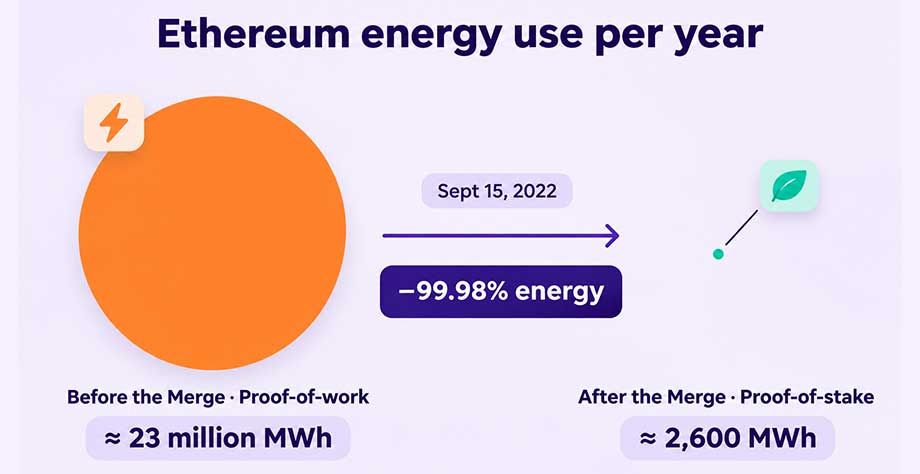
So the honest picture is split. Proof-of-work chains, Bitcoin above all, still carry a heavy footprint. Proof-of-stake chains and most newer networks use a rounding error by comparison: a single Solana transaction burns less power than running an LED bulb for an hour. One caveat worth keeping in view: post-Merge Ethereum’s energy use has crept up as activity grew, though it remains a tiny fraction of its mining days. Judge the energy cost by the consensus mechanism, not by the word “blockchain.”
Should your business actually use blockchain?
Most projects that fail do so because they never needed a blockchain in the first place. Run through these four questions before you commit.
- Do multiple parties who do not fully trust each other need to share one record? If a single organization controls the data, a normal database is simpler and faster. Blockchain earns its cost only when no one party should hold the master copy.
- Do you need a permanent, tamper-evident history? If records must be provably unaltered, blockchain fits. If you routinely edit or delete data, its immutability works against you.
- Can you remove the middleman without breaking anything? The value comes from cutting out an intermediary. If that intermediary is doing useful work you still need, you gain little.
- Can you live with the trade-offs? Slower throughput, irreversible transactions, key-management risk, and regulatory uncertainty are the price of admission. If any one of those is a dealbreaker, choose a different tool.
Answer yes to the first three and stomach the fourth, and blockchain may be a strong fit: supply chain provenance, cross-border settlement, digital identity, or tokenized assets, where its strengths line up with a genuine need. Answer no, and you will almost certainly get more done, faster and cheaper, with conventional technology.
Frequently asked questions
Is blockchain the same as Bitcoin or cryptocurrency?
No. Blockchain is the underlying technology: a shared, tamper-evident ledger. Bitcoin was the first application built on it. Cryptocurrencies are one use case, but blockchains also power supply chain tracking, digital identity, smart contracts, and enterprise record-keeping with no coin involved at all.
What is the single biggest advantage of blockchain?
Trust without a central gatekeeper. Parties who do not know each other can transact and share a verified record with no bank or platform in the middle. Nearly every other benefit, from transparency to resilience, stems from that one property.
What is the biggest disadvantage of blockchain?
Irreversibility combined with key-management risk. There is no undo and no password reset. If you send funds wrongly or lose your private key, the assets are gone, and that unforgiving finality is the drawback businesses and consumers feel most.
Does blockchain really waste a lot of energy?
It depends on the chain. Proof-of-work networks like Bitcoin use heavy energy. Proof-of-stake networks use very little; Ethereum cut its consumption by roughly 99.95 percent when it switched in 2022. The blanket claim that blockchain is an energy hog is out of date.
Is blockchain actually secure?
The core cryptography is extremely strong and rarely broken. Most losses come from stolen private keys and human error, not cracked blockchains. Around 40 percent of the $16.7 billion lost to crypto hacks traced to compromised keys. Security depends far more on how you store keys than on the protocol itself.
Are blockchain transactions anonymous?
Usually pseudonymous, not anonymous. On public chains your identity is not directly attached, but every transaction is permanently visible and tied to an address, and specialist firms can often trace activity back to real people.
Can a blockchain be hacked or altered?
Altering confirmed records requires controlling most of the network’s computing power, which is impractical on large chains. Smaller networks are more exposed to that kind of takeover. The bigger real-world risk is not the chain itself but the wallets, exchanges, and code built around it.
When should a business avoid blockchain?
When one trusted party can hold the data, when records need frequent editing, when speed is critical, or when no intermediary needs removing. In those cases a conventional database is cheaper, faster, and simpler. Blockchain is a specialized tool, not a default setting.
The verdict
Blockchain rewards a narrow set of problems and punishes the rest. Where several parties must share an unforgeable record without a central authority, it is powerful and, increasingly, light on energy. Where a single trusted database would do, it mostly adds cost and slows you down. Match the tool to the problem and it delivers. Force it where it does not belong and you pay for the privilege.
Weighing blockchain for a real project and want a straight answer on whether it fits? Talk to the team at XCEEDBD for an honest assessment before you build.