

The digital landscape is shifting beneath our feet. For businesses operating in the United States and globally, keeping up with the most recent developments in mobile app development is no longer just a competitive advantage—it is essential for survival. As we look toward 2026, the convergence of high-speed connectivity, artificial intelligence, and hardware innovation is rewriting the rules of user engagement.
Mobile apps are taking over the world, cementing themselves as a critical component of daily life for billions of users. According to data from Grand View Research, the global market for mobile applications was valued at approximately USD 228.98 billion in 2023. More importantly, this massive economy is expected to expand at a compound annual growth rate (CAGR) of 14.3% through 2030.
What does this mean for your business? It means the success of your mobile strategy depends entirely on your ability to remain relevant. You must provide a superior, seamless experience that outperforms traditional websites and technologically advanced competitors. Keeping up with the latest trends is the first step in thriving in this mobile-first environment.
Let’s examine the mobile app trends in greater depth for 2026 and explore how they will revolutionize the industry.
1. The Rise of 5G: The Backbone of 2026 Apps
The deployment of 5G is not just a network upgrade; it is a fundamental shift in how applications are built and consumed. By 2026, 5G will have moved from a “new feature” to the standard operating environment, significantly impacting app patterns and development strategies.
Unprecedented Speed and Efficiency
This technology has the potential to revolutionize the creation and use of mobile applications for developers, resellers, and creators alike. When we look at the trajectory of connectivity:
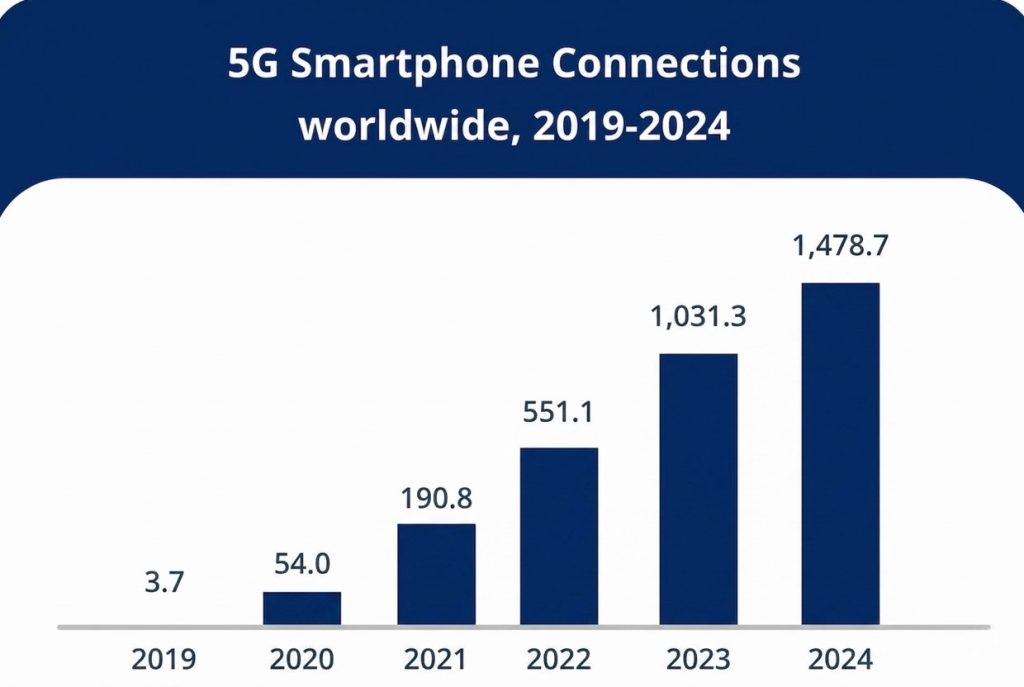
- Massive Growth: Between 2020 and 2021 alone, there were almost 3.5 times as many 5G connections. By the 2024–2026 window, these links are expected to triple again.
- Latency Reduction: 5G is anticipated to increase traffic capacity and network efficiency while delivering a 10x reduction in latency compared to 4G.
- Raw Speed: Depending on the mobile network provider, 5G is expected to be up to 100 times quicker than its predecessor.
What This Means for App Development
For mobile app developers, 5G removes the “speed limit” on innovation. Efficiency and speed will increase significantly, allowing for features that were previously impossible due to bandwidth constraints.
- High-Fidelity Streaming: Apps can support 4K video streaming without buffering.
- Complex Features: Programmers can enhance programs with data-heavy features (like real-time high-polygon 3D rendering) without detrimentally impacting functionality.
- Testing Standards: Developers and mobile app resellers must prioritize 5G network speeds when testing, ensuring apps are optimized to utilize this new bandwidth rather than just existing within it.
2. Apps for Foldable Devices: expanding the Canvas
The hardware market is transforming, and software must follow suit. Apps for foldable devices are rapidly moving from a niche novelty to a mainstream requirement.
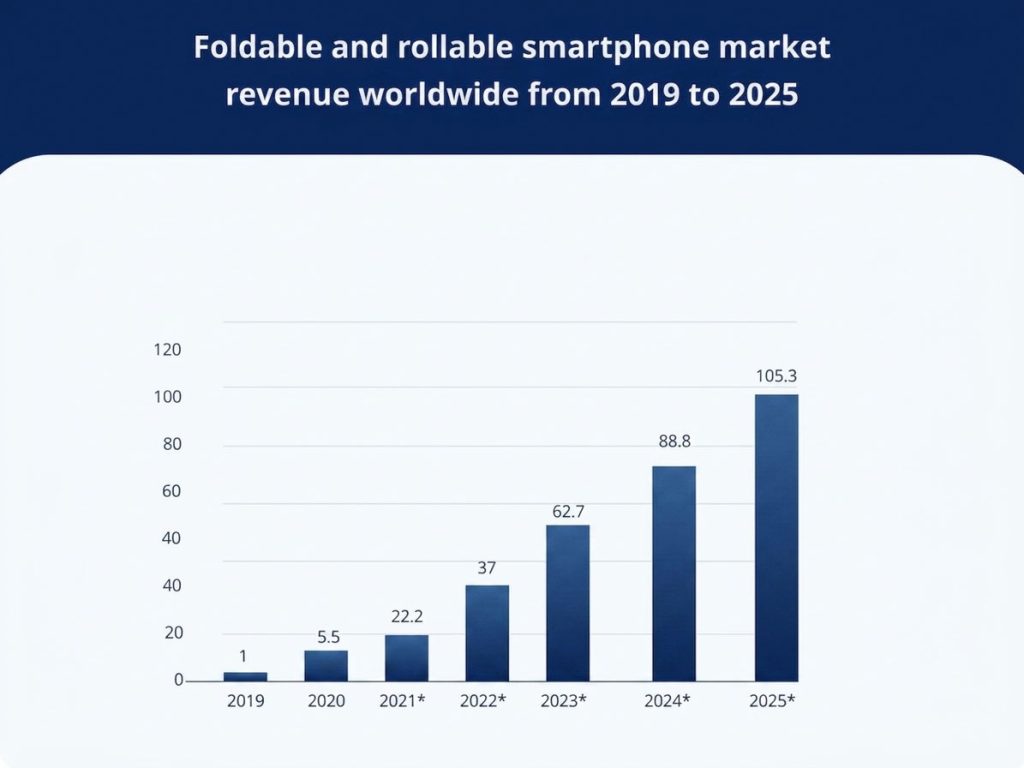
According to Statista, the global foldable and rollable smartphone market revenue saw an increase of 4.5 billion US dollars in 2020 alone. More strikingly, the market is expected to develop at a CAGR of more than 80% to reach over 105 billion US dollars between 2020 and 2026.
The “Unfolded” User Experience
All mobile users benefit when a gadget can be folded to provide a larger screen. However, this form factor requires a specific development approach:
- Immersive Real Estate: A bigger screen provides a rich, immersive experience, bridging the gap between a phone and a tablet.
- Multi-Tasking: A user can handle several tasks at once with multiple windows. For example, a user could watch a video on the top half of the screen while taking notes on the bottom half.
- Gaming and Streaming: Video streaming and gaming apps can best take advantage of foldable devices by simply increasing the size of their screens or using the extra room to provide more information and controls.
Thus, one of the main trends in app development leading into 2026 will be creating “responsive” apps that fluidly adapt their layout the moment a device is unfolded.
3. AR & VR: Bridging the Physical and Digital Worlds
Augmented Reality (AR) and Virtual Reality (VR) have matured. No longer just for gaming, they are now some of the greatest inventions for creating new prospects for companies across industries like retail, real estate, and healthcare.
Market Growth and Potential
To understand the magnitude of this trend, consider these key data points from Statista:
- The AR and VR market is expected to bring in substantial revenue, with projections of US$38.6 billion as early as 2024.
- The market is predicted to grow to a value of US$58.1 billion, with a compound yearly growth rate of 10.77%.
- By 2028, there will be an estimated 3,674.0 million users worldwide using AR and VR combined.
- The US remains the largest source of revenue in this sector, with forecast volumes exceeding US$10 billion.
Real-World Applications
Businesses are already leveraging this cutting-edge technology to solve practical problems:
- Retail Sizing (Nike): Users of the Nike app can scan their feet and receive highly accurate sizing recommendations. This allows online buyers to safely order shoes without worrying about the wrong size, reducing return rates.
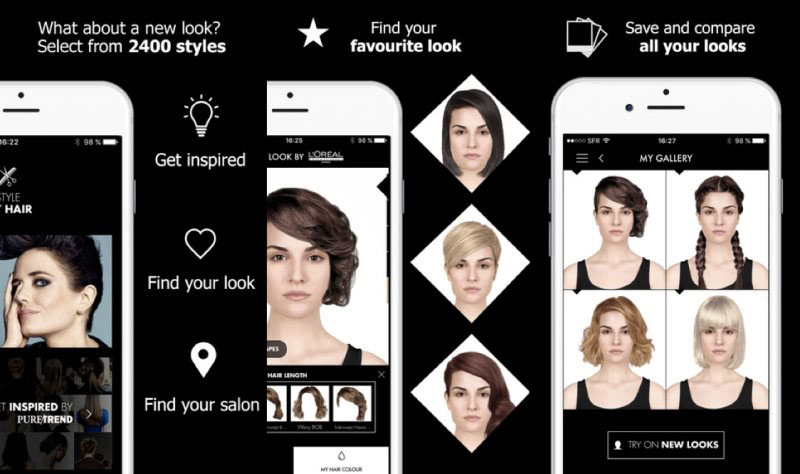
- Beauty Tech (L’Oreal Paris): L’Oreal uses AR in their “Style My Hair” app and virtual makeup software. This technology shows users several hair colors and makeup styles directly on their device via the camera, allowing them to “try before they buy.”
- Navigation (Google Maps): Google launched a “Live View” feature that allows users to view real-time turn-by-turn directions overlaid on pictures of the actual world. By directing the device’s camera at buildings and street signs, the program determines the precise location and guides the user visually.
- Gaming: While Pokémon Go made AR famous, the mechanics it pioneered are now being used for gamified fitness and education apps.
4. Wearable App Integration: The Connected Body
Wearable technology is a popular mobile app industry trend that is already ruling the world. As we approach 2026, the tether between the smartphone and the wearable is becoming tighter and more sophisticated.
As per Whatech, the wearable device app development services market is anticipated to expand at a CAGR of 8.7% from 2024 to 2032. This industry is expanding steadily, driven by the increasing need for data-driven insights and decision-making in health and lifestyle sectors.
Ecosystem Evolution
We have witnessed significant developments that signal the future of wearables:
- Apple WatchOS: Apple continues to update its UI, adding functions like new watch faces, increased wallet access, and deeper health integrations.
- Google & Samsung: Google unveiled a unified platform for wearables that combines its Wear OS with Samsung’s Tizen software platform. This collaboration has reportedly reduced app startup speeds by 30% and improved battery life, making the Android wearable ecosystem more competitive.
The Strategic Advantage
For businesses and app developers, this represents a critical pivot point. You should prepare apps that offer consumers of smartwatches and wearables an outstanding digital experience. Providing a companion app for a watch gives you a clear advantage over competitors who are restricted to the phone screen.
5. Internet of Things (IoT): The Network of Everything
The idea of the IoT is not brand-new, but the increased use of mobile devices to control the physical world has given the IoT seemingly limitless prospects for 2026.
People are used to using technology to make their lives better daily. The IoT expands the network of gadgets linked to the Internet, offering users convenience and automated control through their smartphones.
Smart Homes and Beyond
Smart home technologies are a prime illustration of the growth of IoT and mobile app development:
- Remote Control: Mobile apps can connect to home security systems, lock or open a front door, and change a home’s thermostat from a distance.
- Appliance Integration: They can also connect to refrigerators, ovens, and other home appliances to monitor energy usage or inventory.
Explosive Market Growth
According to Precedence Research and Statista:
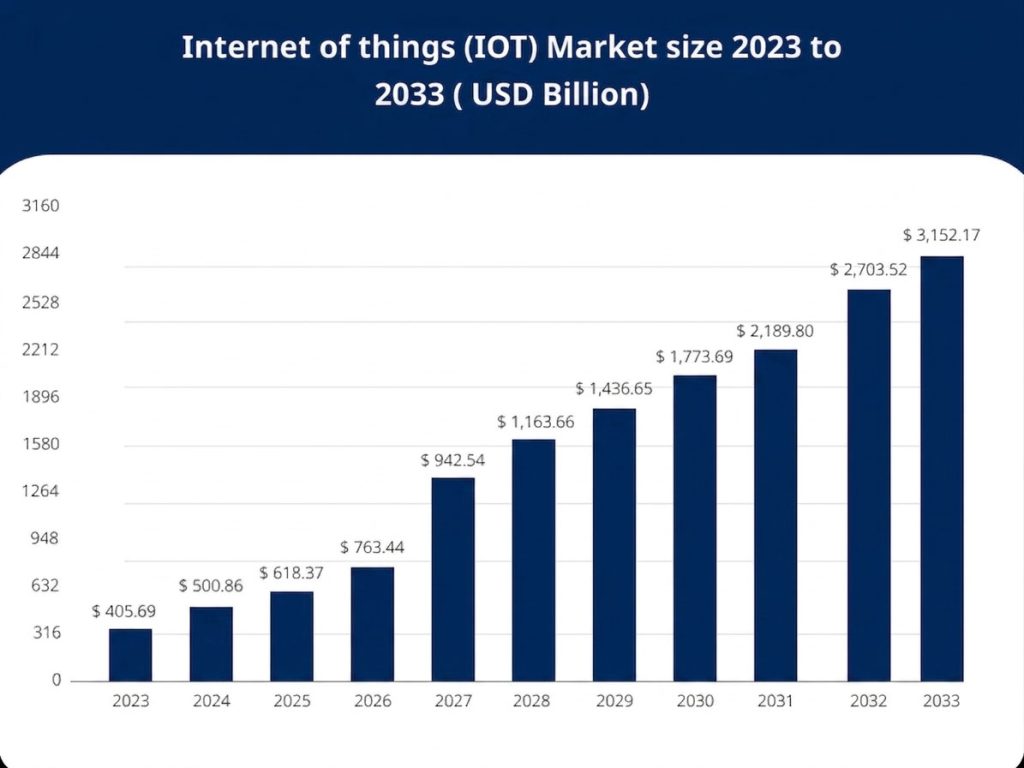
- The global IoT market is expected to grow at a massive CAGR of 22.68%, potentially reaching trillions in value over the coming decade.
- The Automotive IoT segment is anticipated to lead the market, with significant volume as cars become fully connected software platforms.
- The US market is seeing businesses significantly investing in linked autos and smart home appliances, while China is predicted to be a major revenue generator globally.
For developers, this means the “app” is no longer just on the screen—it is the remote control for the user’s entire life.
6. Beacon Technology: Hyper-Local Marketing
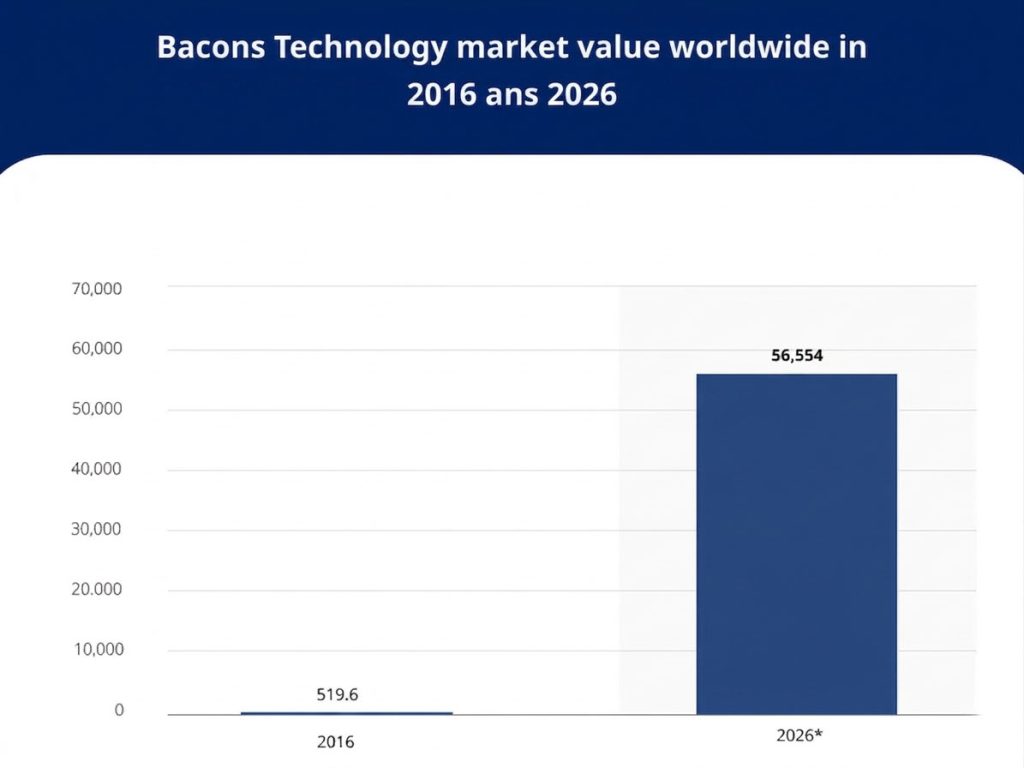
Various sectors have adopted beacon technology, ranging from retail to healthcare and hospitality. Beacons enhance almost any smartphone app with sophisticated, location-based features.
While the first mobile app beacons were created in 2013, this trend has advanced significantly. According to Statista, the market for beacon technology is expanding at a compound annual growth rate of 59.8%, with market value projected to reach $56.6 billion by 2026—over ten times the investment seen in 2016.
How It Works in Retail
Imagine you are a mobile app developer serving retail clients. Here is how beacons revolutionize the shopping experience:
- Connection: Your client places low-energy Bluetooth beacons in their store.
- Detection: When a user with the app passes by a beacon, their device detects the signal.
- Action: The user receives fast notifications about sales and specials on products specifically in that aisle.
- Analytics: In-store beacons track customer activity, determining if a user spends a lot of time in a specific section.
- Retargeting: The app can send push notifications later to encourage the sale of those viewed products.
The primary advantage is proximity marketing. It bridges the digital and physical divide, making the mobile app a tool for enhancing the in-person shopping experience.
7. On-Demand Apps: The “Uber-fication” of Services
On-demand mobile app development is expected to continue its aggressive growth through 2026. Apps like Uber and Airbnb have demonstrated the massive success available in this market, and users now spend tens of billions annually on on-demand services.
Industries Ripe for Disruption
The possibilities appear limitless. Virtually any service that requires a booking can be transformed into an on-demand app:
- Laundry service: Pick-up and delivery at the tap of a button.
- Doctors on-demand: Telehealth consultations immediately.
- Home Services: House cleaning, maintenance, and pest control.
- Wellness: Virtual tutors, fitness coaches on-demand, and pet care.
- Grooming: Barber and beauty salon appointments or house calls.
For mobile app resellers and agencies, this is a fantastic chance to grow your clientele. By utilizing on-demand capabilities, you can add sophisticated booking and payment features to your clients’ apps, boosting revenue for all parties involved.
8. Instant Apps: Frictionless User Acquisition
Android Instant Apps allow developers to create quick app experiences that users can access without downloading the full software. As we move toward 2026, where user attention spans are shorter than ever, this technology is vital for app discovery.
Try Before You Buy
- Zero Installation: Users don’t need to install the app to test it out. They simply click the “Try Now” button.
- Reduced Size: Instant apps are limited in size, meaning they load almost instantly.
- Better Conversion: Giving customers access to an app without requiring a download commitment is a fantastic way to improve user experience and increase final install rates.
According to Business Research Insights, the market for instant messaging and quick-access apps is growing at a CAGR of 9.3%. While instant apps currently have some size restrictions, these are likely to be altered and expanded in the upcoming years, allowing for richer experiences without the download barrier.
9. Mobile Learning (mLearning): Education Anywhere
The creation of mobile apps is changing rapidly due to the promising trends in mobile learning. According to Mordor Intelligence, the size of the mobile learning market is projected to grow significantly, with a CAGR of 24.78% to reach over USD 230 billion by 2029.
Why Mobile Learning is Dominating
There are various reasons why mobile learning is becoming the standard for both academic and corporate training:
- Accessibility: It makes education approachable. Since learners can study from anywhere, they feel more in control of their progress.
- Engagement: Learning has become more participatory and enjoyable because of experiences like 360-degree learning, gamification, and continuous feedback loops.
- Corporate Efficiency: Businesses currently favor mobile learning due to its proven advantages in course completion rates, learning speed, engagement levels, and information retention.
There is a significant need for mobile learning apps. If you have an innovative idea for a mobile learning solution to teach personnel or students, now is the time to contact a group specializing in education app development.
10. Cloud Computing Integration: Performance and Scale
While cloud computing is not a new concept, its full impact on the mobile app market is still being realized. By 2026, cloud integration will be the standard architecture for high-performance apps.
Gartner analysts’ research indicates that by 2026, 85% of companies will adopt a cloud-first strategy.
The Benefits of Cloud-Mobile Hybrids
- Enhanced Performance: Cloud storage technology can enhance mobile app performance by offloading processing power. Rather than saving information locally on the user’s device, apps can perform sophisticated functions and store massive datasets on the cloud.
- Cost-Effectiveness: This is a cost-effective development solution that streamlines development procedures and reduces the need for complex device-side coding.
- Security and AI: Advancements in data security, SaaS (Software as a Service), and Machine Learning (ML) are driving exponential expansion.
The cloud computing industry is anticipated to grow at a CAGR of 16%, driven by the need for apps that are lighter on the device but heavier on capability.
Wrapping Up
So, which mobile app industry trend will dominate in 2026? Only time will tell which single trend takes the top spot, but what is clear is that smartphone users are set to enjoy faster, smarter, and more integrated experiences.
For mobile app developers, the battleground will remain competitive. Success lies in adopting these technologies—5G, IoT, AI, and Cloud—to build products that solve real problems.
If you are navigating these complex trends and need guidance, you don’t have to do it alone. You can hire a freelance mobile app developer or contact a professional mobile app development company to help assist in kickstarting your mobile app journey.
What do you think about these trends in mobile app development? Let’s discuss this in the comments below.
Frequently Asked Questions (FAQ)
Q: Why is 5G important for mobile app development in 2026? A: 5G offers up to 100x faster speeds and 10x lower latency than 4G. This allows developers to build complex, high-bandwidth features like 4K streaming, real-time multiplayer gaming, and high-fidelity AR/VR without performance lags.
Q: How do foldable devices impact app design? A: Foldable devices require “responsive” app design (Continuity API). Apps must seamlessly transition between a folded (phone) screen and an unfolded (tablet) screen, often supporting multi-window multitasking.
Q: What is the benefit of Beacon technology for retail apps? A: Beacons utilize Bluetooth Low Energy (BLE) to detect when a user is near a physical location. Retailers use this for proximity marketing, sending personalized offers to a customer’s phone the moment they walk down a specific aisle.
Q: Are Instant Apps replacing traditional mobile apps? A: Not entirely. Instant Apps serve as a “demo” or a friction-free entry point. They allow users to use specific features of an app without downloading it, which helps increase acquisition, but the full app is usually required for the complete experience.
Q: How big is the mobile learning market expected to get? A: The mobile learning (mLearning) market is growing rapidly. It is projected to expand at a CAGR of roughly 24% and could exceed USD 230 billion by the end of the decade, driven by remote work and accessible education demands.
