
The digital retail environment is no longer just about access; it is about experience. Think about shopping journeys that are not only highly personalized but also remarkably efficient. This is the promise of the transformative power of Artificial Intelligence (AI).
Among recent technological innovations, Generative AI emerges as a distinct catalyst for change, set to redefine the eCommerce sector. Unlike traditional analytical AI, which predicts outcomes based on past data, the power of Generative AI lies in its ability to create. It can generate fresh content, unique recommendations, and personalized shopping experiences that mimic human-like thinking and creativity.
This technology offers more than just a glimpse into the future; it is actively reshaping how we shop online today. At XCEEDBD, we recognize the vast potential of Generative AI in eCommerce. We have crafted this guide to help you navigate this intricate yet thrilling journey, exploring how artificial intelligence paves the way for a truly AI-enhanced marketplace.
The Shift in Consumer Expectations
When shopping online, today’s consumers have become more discerning than ever. The era of generic product lists and static images is fading. Shoppers now seek seamless, personalized, and interactive shopping experiences that go far beyond traditional online shopping boundaries. To succeed, retailers must understand exactly what the modern consumer is seeking.
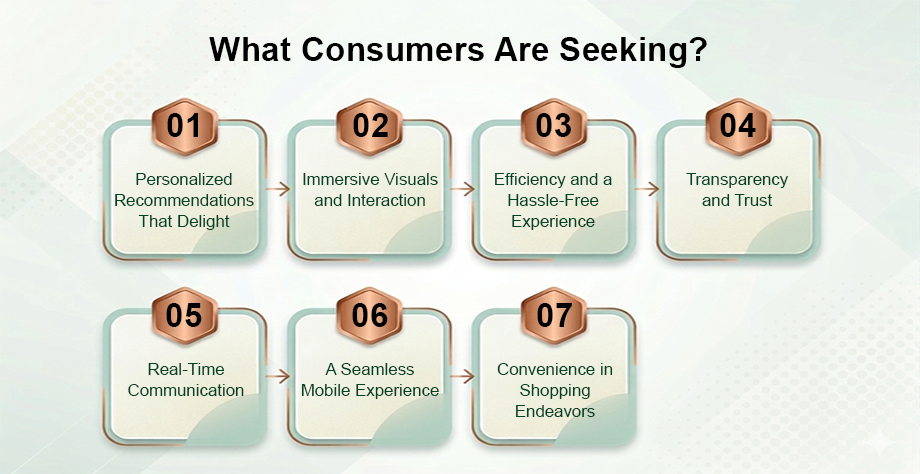
Personalized Recommendations That Delight
Shoppers want eCommerce platforms to inherently understand their preferences and needs. They are no longer satisfied with “customers who bought this also bought that.” They seek tailored product recommendations and content that align specifically with their current interests, lifestyle, and past behaviors.
Immersive Visuals and Interaction
High-quality images, videos, and interactive visuals captivate consumers. Static grids are being replaced by a demand to see products from various angles, virtually try them on, or experience them through augmented reality (AR). Shoppers want to bridge the gap between the screen and physical reality.
Efficiency and a Hassle-Free Experience
Consumers value their time above all else. They expect an effortless shopping process, ranging from intuitive website navigation to swift checkouts and reliable delivery. Friction points—such as slow search results or confusing interfaces—are major drivers of cart abandonment.
Transparency and Trust
Trust is vital in the digital age. Shoppers look for genuine product descriptions and honest reviews from fellow consumers. They want to know exactly what they are buying, with no surprises upon delivery. Transparency in sourcing, pricing, and product capabilities is non-negotiable.
Real-Time Communication
Consumers appreciate the option to engage with brands immediately. Whether through real-time chat, AI-powered chatbots, or virtual assistants, quick answers to their queries matter. They expect support to be available 24/7, not just during business hours.
A Seamless Mobile Experience
As more consumers shop on mobile devices, they expect responsive and mobile-friendly websites or apps. The shopping experience should seamlessly transition from desktop to mobile without losing functionality, cart data, or visual fidelity.
Convenience in Shopping Endeavors
Finally, shoppers are attracted to flexibility. This includes flexible payment options, easy returns, and subscription services that simplify their shopping routines. Convenience is often the deciding factor between a conversion and a bounce.
The Scalability Ceiling: Challenges Facing eCommerce Companies
Despite understanding consumer needs, eCommerce companies often grapple with significant hurdles in meeting them. These challenges can hinder the ability to offer the ideal shopping experience and hamper growth and profitability.
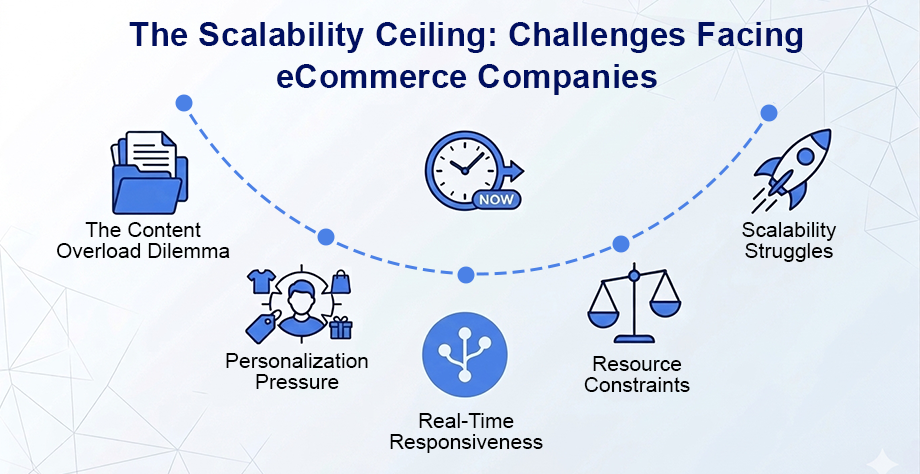
The Content Overload Dilemma
The sheer volume of product listings in a growing marketplace is staggering. Managing and creating content for thousands—or even millions—of products is a challenging task. Without automation, eCommerce companies struggle to provide detailed and compelling product descriptions. This often leads to incomplete or uninspiring product listings that fail to convert or rank in search engines.
Personalization Pressure
Modern consumers expect personalized shopping experiences, but delivering them is operationally difficult. Tailoring recommendations based on individual preferences and past behaviors is vital, yet manually curating personalized suggestions for each shopper is impractical and time-consuming. eCommerce businesses grapple with the challenge of meeting these expectations efficiently at scale.
Real-Time Responsiveness
eCommerce thrives on fresh and relevant content. Keeping descriptions, images, and pricing up-to-date can be a relentless endeavor when products change frequently. Manual updates often result in inaccuracies, dissatisfying customers, and even damaging reputations. The challenge lies in ensuring product information is accurate in real-time across all channels.
Resource Constraints
Producing quality content and handling manual tasks related to product management is resource-intensive. It demands a considerable workforce and time investment. With limited resources, eCommerce companies often struggle to allocate sufficient personnel to maintain content accuracy and consistency without inflating overhead costs.
Scalability Struggles
Maintaining content quality becomes exponentially more difficult as eCommerce companies expand their product range. The challenge is to balance quantity with quality, especially when adding numerous new products, each requiring unique and persuasive descriptions.
How Generative AI Can Revolutionize the Marketplace
In an era where customers are overloaded with choices, Generative AI acts as a sophisticated engine to power the next generation of retail. Let’s dive into how this transformative technology resolves the specific challenges listed above.
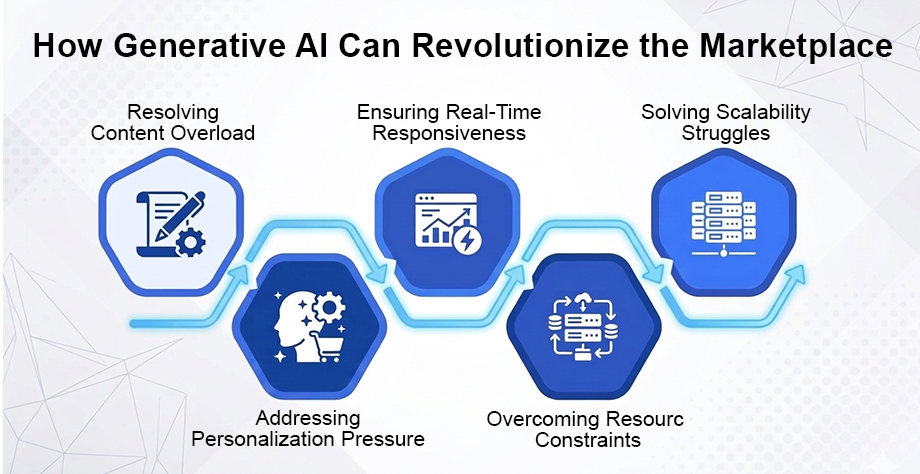
Resolving Content Overload
- Content Generation at Scale: Generative AI can craft product descriptions, reviews, and marketing copy in vast quantities. It relieves businesses from the burden of manual content creation, ensuring every SKU has a unique, SEO-friendly description.
- Dynamic Content Updates: To keep your website’s content fresh and appealing, Generative AI can continuously update information based on new specifications or trends, ensuring your customers are always informed.
Addressing Personalization Pressure
- Tailored Shopping Journeys: Generative AI learns from customer behavior to tailor recommendations instantly, making every shopping journey unique to that visitor.
- Virtual Stylists: In sectors like fashion and beauty, AI can create “virtual stylist” solutions. These tools help customers mix and match products to create their perfect look, mimicking a consultation with a human expert.
Ensuring Real-Time Responsiveness
- Instant Customer Support: AI-driven chatbots provide immediate assistance, answering queries with context-aware responses rather than scripted replies. They help customers navigate virtual aisles efficiently.
- Dynamic Pricing: AI can adjust prices in real-time based on demand, stock levels, and user preferences, allowing businesses to maximize sales potential while remaining competitive.
Overcoming Resource Constraints
- Automated Inventory Management: Generative AI can predict demand patterns and optimize inventory flow, reducing waste and ensuring products are available exactly when customers need them.
- Automated Content Moderation: For marketplaces that allow user reviews or uploads, AI-powered moderation tools keep user-generated content in check, ensuring a safe and reputable environment without heavy human oversight.
Solving Scalability Struggles
- Expand Without Limits: Generative AI allows you to scale your business infrastructure instantly. As your eCommerce empire grows, AI handles the increasing demand for personalized content and recommendations without a linear increase in headcount.
- Multi-Platform Consistency: AI ensures you maintain consistency in your shopping experience, whether your customers are on a website, mobile app, or interacting via a voice-powered device.
Real-World Examples: Blueprints for Success
Several industry leaders are already leveraging Generative AI to redefine their market presence. These examples illustrate the practical application of the technology.
1. The Fashion Trendsetter: Stitch Fix

“Revolutionizing Personalized Styling with AI”
Stitch Fix is at the forefront of using Generative AI to curate personalized clothing recommendations for customers. Their AI algorithms analyze user preferences, style trends, and seasonal shifts to generate customized fashion recommendations. By harnessing the power of Generative AI, Stitch Fix enhances the shopping experience, helping customers discover unique fashion pieces they may not have found otherwise. This creates a service that feels deeply personal, despite serving millions of users.
2. The Virtual Interior Designer: Wayfair
“Transforming Home Decor with AI-Generated Imagery”
Wayfair employs Generative AI to create lifelike room visualizations for customers. Shoppers can see how furniture and decor items would look in their specific spaces before purchasing. This interactive experience helps them make better-informed buying decisions and adds a new level of confidence to the eCommerce process, significantly reducing return rates.
3. The Content Wizard: GPT-3 by OpenAI

“AI-Generated Product Descriptions and Reviews”
GPT-3, developed by OpenAI, is being utilized by various eCommerce businesses to automate the creation of product descriptions and reviews. This AI’s natural language capabilities can generate engaging, informative content for various products that reads as if it were written by a human copywriter. It saves time and resources and ensures that customers receive high-quality product information immediately upon product launch.
4. The Makeup Expert: Sephora

“AI-Powered Virtual Try-On Experiences”
Sephora leverages Generative AI to offer customers virtual try-on experiences for makeup and skincare products. Shoppers can see how different cosmetics will look on their actual skin tone and face shape via their camera. This helps them make more informed beauty choices, enhancing user engagement and boosting sales by removing the “guesswork” from buying cosmetics online.
5. The Local Culinary Guide: Yelp

“AI-Generated Restaurant Recommendations”
Yelp utilizes Generative AI to create personalized restaurant recommendations based on user reviews and preferences. Their AI algorithms analyze vast amounts of unstructured data to suggest dining options that align with individual tastes. By providing such personalized suggestions, Yelp increases user engagement and the likelihood of customers discovering new and exciting dining experiences.
Key Considerations for Implementation
Integrating Generative AI into your eCommerce platform is exciting, but it requires careful planning and execution to ensure a return on investment. Here are the critical factors to consider:
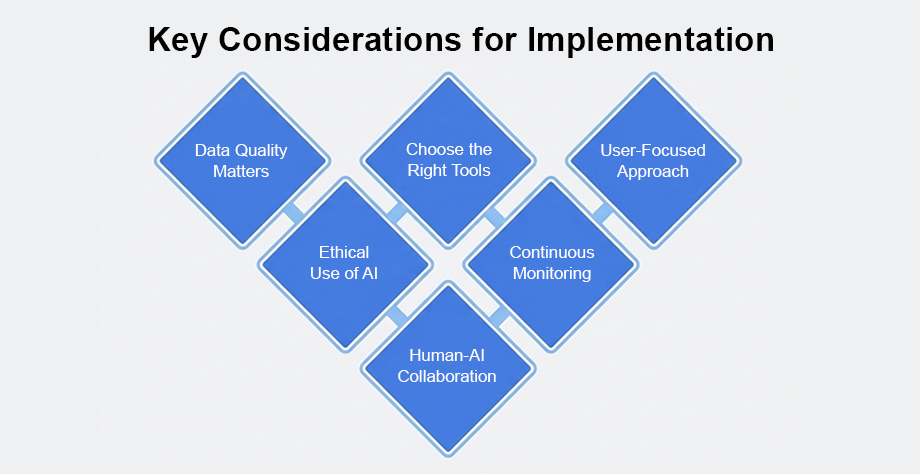
Data Quality Matters
High-quality data is the fuel for Generative AI. You must ensure your data is clean, organized, and up-to-date. If the input data regarding product specs or inventory is flawed, the AI output will be inaccurate. A strong data infrastructure forms the foundation for accurate AI-generated content.
Choose the Right Tools
Select the appropriate Generative AI tools or platforms that align with your specific business needs. Do not just chase the latest hype; consider factors like ease of integration with your current CMS, scalability for future growth, and the level of technical support provided.
User-Focused Approach
Always keep the end user in mind. Generative AI should not just be used for novelty; it should genuinely enhance the shopping experience, making it more personalized and engaging for customers. If an AI feature adds friction rather than removing it, it should be reconsidered.
Ethical Use of AI
Be aware of ethical considerations. AI-generated content should align with your brand’s values and maintain transparency with customers. It is important to disclose when customers are interacting with AI, ensuring trust is maintained.
Continuous Monitoring
AI is not a “set it and forget it” solution. Regularly monitor the performance of your Generative AI system. Collect feedback from users and use it for fine-tuning the algorithms to improve relevance and accuracy over time.
Human-AI Collaboration
Understand that Generative AI is a tool to assist human creativity, not replace it entirely. The best results come from a collaborative approach where AI handles scale and data processing, while human experts oversee strategy, tone, and ethical nuances.
How Can XCEEDBD Help?
At XCEEDBD, we understand the immense potential of Generative AI in eCommerce and its impact on the future of online marketplaces. We are committed to helping businesses harness this technology for sustainable growth and innovation.
Here is how we assist you in navigating this transformation:
AI Integration Expertise
With a team of experienced AI professionals, we have the knowledge and expertise to seamlessly integrate Generative AI solutions into your existing eCommerce platform. Our experts guide you through the entire integration process, ensuring minimal disruption to your current operations.
Tailored Solutions
We recognize that every eCommerce business is unique. We work closely with you to tailor AI solutions for eCommerce that align with your specific objectives—whether you need automated content generation, advanced product recommendations, or customer personalization engines.
Data Management Optimization
Data quality is at the core of AI’s success. We assist in optimizing your data infrastructure to ensure that it is clean, structured, and ready for AI-driven insights. We turn your raw data into a strategic asset.
Ethical AI Implementation
XCEEDBD places great emphasis on the ethical use of AI. We ensure that your AI solutions adhere to ethical standards and data privacy regulations, protecting both your brand reputation and your customers’ data.
Continuous Support
Our partnership doesn’t end with integration. We offer continuous support, monitoring, and improvement services to ensure your AI-enhanced marketplace thrives as technology evolves.
To create a successful online store in this new era, it is essential to hire eCommerce developers with a proven track record in building user-friendly, high-performance websites infused with the latest technology.
Frequently Asked Questions (FAQ)
1. What is the difference between traditional AI and Generative AI in eCommerce? Traditional AI usually analyzes data to predict outcomes (like forecasting sales). Generative AI creates new content, such as writing product descriptions, generating images, or formulating unique responses in customer service chats.
2. Can Generative AI replace human customer service agents? Not entirely. While AI can handle routine queries and instant support (Tier 1 support), human agents are still vital for resolving complex, emotional, or high-stakes customer issues. The goal is Human-AI collaboration.
3. Is Generative AI expensive to implement for small eCommerce stores? Costs are scaling down. While building a custom model is expensive, integrating existing APIs (like OpenAI) or using eCommerce platforms with built-in AI features is becoming increasingly affordable for small to mid-sized businesses.
4. How does Generative AI help with SEO? It helps by ensuring every product page has unique, descriptive content, which prevents duplicate content issues. It can also generate meta tags and optimize content for voice search queries, improving organic visibility.
5. Is customer data safe when using AI? Yes, provided you work with ethical partners like XCEEDBD. We ensure that AI implementations adhere to data privacy regulations (like GDPR or CCPA) and that customer data is used securely.
To Conclude
Generative AI emerges as a guiding star, leading the industry toward an AI-enhanced marketplace. The path ahead is promising, but not without its challenges. With an increasing number of eCommerce businesses integrating Generative AI into their platforms and seeking assistance from top eCommerce consulting services, the competition is becoming fierce.
The stakes are high, but so are the rewards. As we navigate this scenario, one thing remains certain: the future of online shopping is being redefined, one innovative AI-powered step at a time.
Ready to Upgrade Your Marketplace?
Explore Our Services Discover how our tailored development services can transform your data into revenue. [View Our eCommerce Solutions]