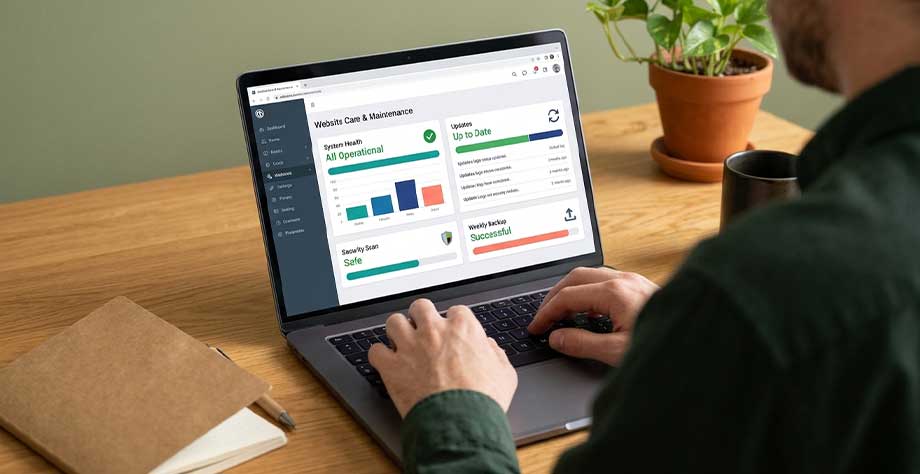
Short answer: White-label services let your agency sell expert web development, design, SEO, PPC, and software under your own brand, while a specialist partner does the delivery invisibly behind you. You add new service lines in days instead of months, skip six-figure hiring cycles, and keep 40–70% gross margins by buying at wholesale and selling at retail.
That’s the entire model in three sentences. The rest of this guide shows you exactly how to run it.
Most agencies don’t go looking for a white-label partner when things are calm. They start looking the week a client asks for SEO when you only do paid media, or three new accounts land at once and your team is already underwater. White-label is how you say “yes” to that demand without breaking your delivery or your margins.
This guide breaks down how the model works, eight concrete ways agencies scale with it, the real 2026 pricing math, a vetting framework, and a partner-selection checklist you can use this week.
What “White-Label” Actually Means
A white-label service is one your agency resells under its own brand while a third-party partner builds and delivers it. Your client sees your logo on the reports, your name on the dashboard, and your account manager on the call. The partner stays invisible.
Think of a bakery that makes cookies, then lets you put your sticker on the box. Your customers love your cookies. They never meet the baker. White-label works the same way: a development or marketing partner does the heavy lifting, you own the relationship and the brand.
This model lets agencies do three things at once: expand what they offer, cut operational cost, and stay focused on the work they’re genuinely best at.
It’s no longer a fringe tactic. Around 73% of agencies have already folded white-label services into their offerings, and the global white-label market is projected to approach $99 billion by 2026. Outsourcing is now the default, not the exception: roughly 80% of companies outsource at least one part of their marketing.
8 Ways Agencies Scale with White-Label Services
White-label gives you specialized talent and delivery capacity without a single new hire. Here’s how that plays out across real agency situations.
1. Expand Offerings Without the Overhead
A content-and-SEO agency keeps losing deals because clients also want full website builds, something they don’t staff for. By partnering with a white-label web development team, they offer it the next day.
- No hiring, onboarding, or training cycle
- Expert delivery without in-house specialists
- A broader menu that wins and keeps more clients
- Zero added operational complexity
2. Scale Capacity Faster Than You Can Hire
A small PPC shop suddenly lands more accounts than it can run. Instead of turning business away, it routes campaign execution to a white-label partner and keeps every client.
Building that capacity internally is slow: recruitment runs two to three months, onboarding another one to two, and process refinement two to three more, roughly five to eight months before a new hire is fully productive. A white-label partner absorbs the overflow this week.
3. Keep Quality High While Growing
A social media agency wants to grow but fears that scaling too fast will sink its work quality. A vetted white-label design and strategy partner lets it grow without that drop, protecting client trust and reputation at the same time.
This is where retention compounds. Agencies that use white-label services report about 42% higher client retention, because clients get a wider, more consistent service offering without juggling multiple vendors.
4. Stay Flexible When Client Needs Shift
An SEO agency’s clients keep requesting content and PPC, work outside its core. Rather than rebuild its whole process, it plugs in white-label partners for those lines on demand and scales them up or down as the quarter changes.
Elastic capacity is the point. Seasonal spikes, campaign launches, and one-off niche requests stop being emergencies when you have a partner ready to flex.
5. Win on Price Without Killing Margins
A small dev shop wants competitive rates but is buried under high operational cost. White-label wholesale delivery lets it offer sharp pricing and improve margins, then reinvest the savings into sales and growth.
- Cost-efficient resources with no quality trade-off
- Higher margins from lower delivery overhead
- Competitive pricing that attracts new clients
- Savings funneled back into growth
6. Focus on Your Core Strengths
A marketing agency burns hours on technical audits and app builds, pulling senior people away from strategy and client relationships. Handing non-core work to a white-label partner lets the team do what actually drives results and revenue.
An agency owner generating new business at $200/hour shouldn’t be managing a campaign by hand, even when the raw cost math looks even. Their time is the scarce asset.
7. Deliver a Seamless Client Experience
A growing SEO firm struggles to keep service standards as volume climbs. A white-label partner for technical SEO and content keeps delivery consistent and on time, so the client experience never cracks under growth.
Tie this to clear standards: branded dashboards, a fixed reporting cadence, and SLAs like “rank one new keyword in the top three within 90 days” keep the partner accountable and the client confident.
8. Manage Risk When Entering New Services
A marketing agency wants to add web development but fears the risk of building a brand-new team too early. An experienced white-label development partner removes that gamble, hiring risk, quality risk, and financial exposure, while it tests demand for the new line.
The Real Money: White-Label Pricing in 2026
White-label works financially because of one word: arbitrage. You buy delivery at a wholesale rate and sell it at retail. The spread covers your account management, sales, proposal work, quality control, and profit. The beauty of the model is that your costs scale linearly with revenue, add a client, add a wholesale fee, instead of jumping in expensive step-functions every time you hire. That predictability is what makes recurring, profitable growth possible.
The standard markup across the industry is 2x to 3x wholesale, producing gross margins in the 40–70% range depending on service line and how much strategic value you layer on top.
| Service Line | Typical Wholesale (Monthly) | Typical Resale (Monthly) | Gross Margin |
| White-Label SEO | $350 – $8,000 | $750 – $18,000 | 45–60% |
| White-Label PPC | $900 – $2,000 | 2x–3x cost | 40–60% |
| White-Label Web Dev | Project-based | 2x–3x cost | 50–70% |
| Link Building | ~$250 / placement | ~$500 / placement | 40–60% |
A worked example makes it concrete: a reseller running 15 SEO retainers at mid-market rates nets roughly $25,500 in monthly contribution after fulfillment and account-management time, with no full-time SEO hire on payroll.
Two more levers matter. Volume discounts are real: committing to 10+ accounts typically unlocks 15–30% better wholesale rates. And in-house only wins past scale, a senior SEO strategist runs $90,000–$120,000 fully loaded per year, a cost that’s only justified once you exceed roughly 25 active retainers. Below that, white-label is cheaper, faster, and lower-risk.
Watch the floor. Wholesale SEO priced under $300/month should raise suspicion, that price point usually means AI-generated content with no editing, low-quality links, or no account management. The hidden cost shows up as client churn six months later.
How to Vet a White-Label Partner (Before You Sign)
The wrong partner doesn’t just cost money, it costs you the client, because you’re the agency of record. Use this framework.
1. What do you need from the deliverable? Judge it on functionality, usability, and security. Demand strong protection against bots, DDoS, and data leaks, plus around-the-clock support for fast issue resolution.
2. How will you sell and position it? Most white-label partnerships fail from weak go-to-market, not a weak product. The best partners hand you positioning guidance, sales materials, and training so your launch actually lands.
3. What integration support is included? Setup should be a shared responsibility. Your partner should help you prepare and migrate smoothly, not hand you a login and disappear.
4. How does the partnership operate day to day? Get explicit before you sign:
- Who owns infrastructure and uptime, you or the partner?
- Do you handle first-line client support, or do they?
- Is positioning in-house, or do you lean on the partner?
- How is client data captured, secured, and reported?
- Will you get a dedicated account manager?
5. Is it real white-label, or just outsourcing? True white-label means the provider never contacts your client, their name appears nowhere, reports come branded as yours, and revisions flow through your workflow. If any of that breaks, it isn’t white-label.
A Quick Partner-Selection Checklist
Use this before signing any agreement:
- Branded reporting — dashboards and reports carry your logo, never theirs.
- Dedicated account manager — one accountable contact, not a shared inbox.
- Communication SLA — same-day or next-day response in writing. Slow replies quietly destroy your margin.
- Written SLAs and benchmarks — performance targets, escalation steps, and your right to exit if results fall short.
- Data-security provisions — clear handling of client credentials, IP ownership, and NDAs.
- Sample work and references — request reports, case studies, and referrals from agencies your size.
- Transparent pricing tiers — clear Basic / Standard / Premium structure, not “custom quote” stonewalling.
Communication and workflow fit matter more than raw technical skill. A brilliant team that takes three days to reply will damage client relationships no matter how good the output is.
Scale Smart with XCEEDBD
At XCEEDBD, we deliver white-label web development, software engineering, design, and digital marketing built to launch under your brand. Your clients see your name, your reports, and your dashboards, while our team handles delivery invisibly behind you.
Whether you’re expanding into a new service line, absorbing an overflow of accounts, or protecting quality as you grow, we help you scale without the overhead of building every capability in-house.
Book a free consultation and let’s map white-label solutions to your growth plan.
Frequently Asked Questions
What are white-label services for agencies?
White-label services are products or solutions your agency resells under its own brand while a third-party partner builds and delivers them. Clients see only your branding, your team handles strategy and the relationship, and the partner stays invisible. It lets agencies add capabilities like web development or SEO without hiring in-house.
How do agencies actually make money with white-label?
Through arbitrage. You pay a wholesale rate to the partner and charge clients a retail price, typically a 2x to 3x markup. After account management and sales costs, agencies generally keep 40–70% gross margins, with no fixed salary overhead.
Is white-label the same as outsourcing?
Not quite. Outsourcing simply moves work to an external team. White-label adds a branding layer: the provider never contacts your client, their name appears nowhere, and every deliverable is branded as yours. All white-label is outsourcing, but not all outsourcing is white-label.
How much do white-label services cost in 2026?
It varies by service line. White-label SEO runs roughly $350–$8,000/month wholesale; PPC management often $900–$2,000/month; web development is usually project-based. Most agencies resell at 2x to 3x those rates. Avoid providers priced under $300/month, that floor usually signals cut corners.
When should an agency build in-house instead of using white-label?
Once you exceed roughly 25 active retainers in a single service line. Below that, a fully loaded senior hire at $90,000–$120,000/year is harder to justify than a flexible white-label partner. Most agencies run white-label through their first 25–40 clients before considering an internal team.
How do I choose the right white-label partner?
Prioritize branded reporting, a dedicated account manager, fast communication SLAs, written performance benchmarks, and strong data-security terms. Request sample reports and references from agencies your size, and weight communication and workflow fit as heavily as technical skill.
Will my clients find out I’m using a white-label partner?
Not with a true white-label arrangement. Deliverables, dashboards, and reports carry your branding, and the partner never makes client contact. This preserves your credibility and keeps the relationship fully yours.
Does white-label actually improve client retention?
Yes. Agencies using white-label services report about 42% higher client retention, largely because clients get a broader, more consistent service offering from a single trusted source instead of managing multiple vendors.