A client just asked for a service you don’t offer. You have two choices: refer them away and watch the relationship walk out the door, or say “yes”—and figure out delivery behind the scenes.
Smart agencies pick door number two. They white-label. They sell the work under their own brand, let a specialist build it, pocket the margin, and keep the client. No new hires. No bench time during slow months. No “sorry, that’s not what we do.”
But here’s the part the glossy guides skip: white labeling goes badly more often than it goes well. Margins evaporate. Briefs get lost in translation. The wrong partner emails your client directly. This checklist fixes that—a no-fluff, field-tested playbook for choosing a partner, protecting your margin, and staying invisible.
What White Label Actually Means
White label is simple. A specialist firm builds a product or service. You rebrand it as your own and resell it to your client. The end client never knows a third party was involved—no code footprints, no branding traces, no awkward discovery moment on a kickoff call.
It’s the same model behind store-brand groceries and credit-card processing. In the agency world, it shows up everywhere: web development, mobile apps, SEO, PPC, design, and custom software. The arrangement is disclosed between the agency and the partner through a contract, but the end client is not required to know who is fulfilling the work, just as a retailer does not disclose which manufacturer made their product.
And to be clear: it’s completely legal and standard practice. There’s no obligation to tell clients you use a partner, the same way they don’t ask which freelancer designed their logo.
Why Agencies Are Going All-In on White Label in 2026
The demand isn’t slowing. With the global web development market projected to hit $82.4 billion by the end of 2026, the demand for quality website development projects isn’t coming down anytime soon. Agencies that can say “yes” to more projects win. Here’s why the model is now a core strategy, not a stopgap.
- Become full-service overnight. Offer web, mobile, custom software, and marketing—even if none of it exists on your team today. Stop referring work out and losing clients.
- Turn fixed costs into flexible ones. Hiring an in-house developer is a five-figure-plus annual commitment. The average cost of hiring a mid-level mobile app developer in the US sits between $90,000 and $130,000 per year, excluding benefits, onboarding time, and the three to six months it takes before a new hire is fully productive. White label means you pay only when a project exists.
- Move at client speed. White-label partners can typically begin projects within 1–2 weeks, compared to the 2–4 months it usually takes to onboard an in-house developer.
- Grow faster. Research shows that agencies outsourcing 40%–60% of their work grow 2.3 times faster and see margins increase by 18%–22%.
- Protect your core. Let your team focus on strategy, sales, and client relationships—the things that actually build your brand.
The White Label Workflow: How It Actually Runs
Before you vet anyone, understand the mechanics. A clean engagement looks like this:
- Client briefs you. Say, a custom e-commerce build.
- You scope and price it—with your margin built in from the start.
- You hand the brief to your partner under a signed NDA that protects client details.
- The partner builds behind the scenes, sending staging links for review.
- You QA, polish, and deliver under your brand.
The client is happy. You look like heroes. Everyone gets paid. The entire arrangement hinges on one rule: all client-facing communication runs through your team—never the partner. A professional partner already operates this way.
The Margin Math Nobody Shows You
This is where agencies either build a profit engine or quietly bleed money. The model works because your partner doesn’t carry your sales costs or account-management overhead, so they charge a wholesale rate. You bill retail. The spread is yours.
The typical numbers: white label web design projects might range from $500 to $2,000 depending on complexity, and the reselling agency then marks these up 40 to 100 percent when billing the end client. Most agencies aim for 50–70% gross margins on resold white-label work, which only works if pricing is predictable.
But “gross margin” is a trap. Here’s the reality check every owner needs:
On a $10,000 project where the partner fee is $3,500, your gross profit looks like $6,500. But once you factor in internal management costs, the actual profit is closer to $4,700.
As one agency founder put it: “The margin is real on paper. Whether it survives contact with reality depends on how efficiently you run the process.”
The takeaway: To maintain a 40–60% markup, include internal management hours in your upfront cost calculation. Anything under a 30% margin leaves little room to handle revisions, scope creep, or unexpected QA. Quote the client on total value delivered—your project management and quality control are part of what they’re paying for—not on what the partner charges you.
Which Services Are Worth White Labeling First
You don’t have to white-label everything at once. The smartest agencies start where demand is highest and in-house hiring makes the least sense. The strongest candidates:
- Web and app development. The classic use case. A client wants a custom build, your team is full or lacks the stack, and hiring a senior developer for one project never pencils out.
- SEO and PPC. Specialized, tool-heavy, and constantly shifting. A small agency with even two or three paid-ads clients can run a profitable white-label arrangement at margins that in-house management couldn’t touch at that scale.
- Design and UI/UX. Overflow design work and one-off interface projects are ideal for a partner, especially when your designers are blocked on bigger builds.
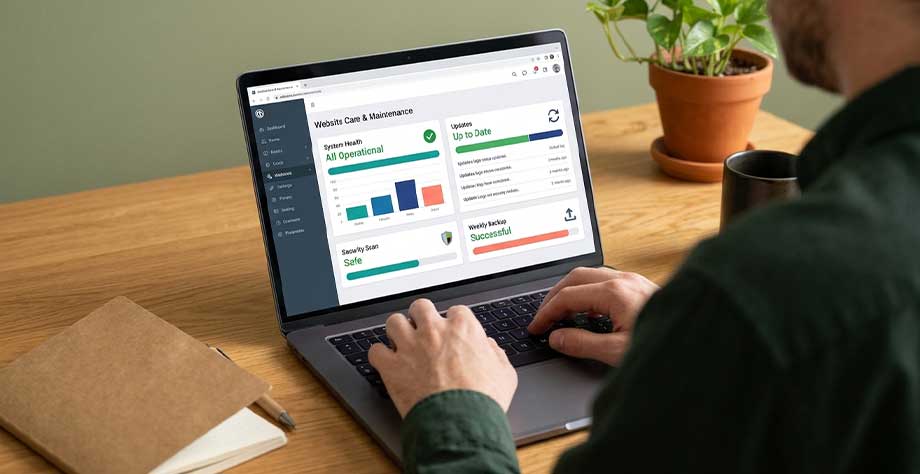
- Maintenance and care plans. Recurring, predictable, and easy to mark up. Ongoing updates, security patches, and uptime monitoring become a steady revenue line your clients rely on, with the technical work handled quietly behind the scenes.
The rule of thumb: white-label the work that’s specialized enough to need an expert but inconsistent enough that a full-time hire would sit idle between projects.
The Ultimate White Label Vetting Checklist
A portfolio tells you what a partner can build. It tells you nothing about whether they’ll protect your reputation when it’s on the line. Choosing a partner is less about comparing portfolios and more about reducing operational risk. Score every candidate against these.
1. Confidentiality and NDA Policy
This is non-negotiable. Ask directly: “What happens when my client asks who built their site?” A reliable partner has a clear policy and is willing to sign a formal NDA. Any hesitation on this point is a reason to keep looking. Push for a mutual NDA—it binds them to confidentiality and protects you from having your client base approached directly, which is the single biggest risk in any white-label deal.
2. Pricing Transparency
Published rates signal maturity. Partners who give you a number only after three calls and a “discovery session” for a standard build are padding process to justify margin. Get the full picture before any work: what’s included, how change requests are priced, the revision policy, and whether there are mandatory minimums.
3. Documented QA Process
Ask them to walk you through their testing workflow. You’re looking for code review against coding standards, responsive testing across breakpoints, performance benchmarks, and security scanning. “We test everything” is not an answer. A real QA gate is.
4. Proven, Relevant Portfolio
Generic “we can do anything” portfolios are a yellow flag. You want five or more projects similar to your typical client work, completed in the past 18 months, in your verticals—membership sites, e-commerce, content-heavy builds, whatever you sell.
5. Verifiable References
Look past the website testimonials. Ask for a list of current agency partners and actually call them. Ask about communication style, project-management approach, deadline adherence, and overall satisfaction. Agency-to-agency references are the most diagnostic signal you’ll get.
6. Communication and Timezone Overlap
A highly skilled team that responds days later will create more problems than it solves. Test response times during evaluation, not after you’ve committed. Confirm working-hour overlap and agree on response windows up front—for example, Slack within four hours during business hours, email within 24.
7. Genuine Scalability
A partner who can handle two to three projects per month but has no capacity beyond that is not the right partner for a growing agency. Ask about team size, current workload, and their ability to scale if your volume jumps.
Red Flags That Should End the Conversation
Walk away—or proceed with extreme caution—if you see any of these:
- Hesitation on signing an NDA. Full stop.
- Pricing hidden behind multiple sales calls for standard work.
- No documented QA or vetting process for their own developers.
- A “we do everything” portfolio with no depth in your niche.
- Slow or vague responses during the evaluation phase—it only gets worse after you sign.
- Pushback on a non-solicitation clause, which protects you from having clients poached.
The Paid Test Project: Your Single Best Risk Filter
Here’s the move that separates agencies who scale smoothly from those who keep relearning painful lessons: never hand a major client project to a brand-new partner.
A paid test project reveals far more than a sales conversation. It exposes how the partner communicates, handles feedback, and delivers under real conditions. Agencies that skip this step and hand off a $15,000 client project on day one are gambling with their reputation.
How to run it:
- Start with a low-stakes internal project or a minor client update—not your flagship account.
- Evaluate three things under real conditions: turnaround, build quality, and communication.
- Give it time. Agency onboarding takes a day, but full sync between teams takes a quarter. After the first three months and at least three projects, you should be happy with everything—or it’s time to find a new partner.
The lowest-risk entry point of all: use white label for projects your agency would otherwise decline—when your team is at capacity, or a client requests a stack you don’t cover. This lets you test the process and understand the margin before making it a core service line.
Onboarding: Where Margin Is Won or Lost
Most agency owners think onboarding is just “getting access” and sending a brief. That’s the fastest way to create rework, delays, and the feeling that you’re project-managing your vendor instead of running your agency. Lock down these six things in writing before the first build:
- Service boundaries—what’s included, what’s excluded, what counts as a change order.
- Revision policy—how many rounds, feedback windows, and how direction changes are handled.
- File and brand rules—naming conventions, where assets live, voice and design do’s and don’ts.
- A QA gate—the checklist that runs before anything reaches your client-facing team.
- An escalation path—what qualifies as urgent and who handles it.
- A communication cadence—weekly updates minimum, with staging links for visual work.
Don’t scale volume until the pilot workflow feels stable and low-friction for your account team.
Build In-House or Buy a Partner? A Simple Decision Framework
Every agency owner eventually wrestles with this. The honest answer is that it depends on volume and how core the service is to your identity. Use this as a gut check.
Lean toward white label when:
- The service isn’t core to your brand—clients know you for something else.
- Project volume is inconsistent. You’d be paying a salary through slow months.
- You need to move now. A client asking for an app in April isn’t waiting until October.
- You’re testing a new service line before committing to a full hire.
Lean toward hiring when:
- The service has become central to what you sell and shows up in most engagements.
- You have steady, predictable demand that keeps a full-time person genuinely busy.
- The work requires deep, ongoing context about your clients that’s hard to hand off repeatedly.
Here’s the part many guides get wrong: it isn’t permanent. Plenty of successful agencies white-label indefinitely because it keeps the business lean and growth uncapped. Others use it as a bridge—proving demand exists, then bringing the capability in-house once the revenue justifies the headcount. Both are valid. Start variable, and convert to fixed only when the numbers force your hand.
A Quick Word on Protecting Client Data
You’re the conduit between your partner and your client, so data discipline is on you. To limit the risk of a leak, don’t share client passwords, high-risk data, or nonpublic information with a partner. Only pass on what they need to complete the project. Set up shared, revocable access to staging and hosting rather than handing over master credentials.
Final Word: White Label Is a System, Not a Shortcut
Done carelessly, white label is a fast way to torch a client relationship you spent years building. Done deliberately, it’s one of the most powerful growth levers an agency has—uncapped scale, healthy margins, and a lean operation that bends with demand instead of breaking under it.
The agencies pulling ahead in 2026 aren’t the ones hiring the most developers. They’re the ones who found the right partner and built a system around that partnership. Vet hard, paper the agreement, run the test project, and nail the onboarding. Do that, and the wizardry takes care of itself.
Frequently Asked Questions
Is white labeling legal, and do I have to tell my clients?
Yes, it’s completely legal and a standard business practice across industries. There’s no legal obligation to disclose that you use a white-label partner. As long as deliverables carry your branding and the partner stays invisible, the client relationship remains entirely yours.
How much margin can I realistically make?
Most agencies mark up partner costs by 40–100% and target 50–70% gross margins. After accounting for your internal management and QA time, plan for a net margin closer to 30–50%. Anything under 30% leaves no cushion for revisions or scope creep.
What’s the difference between a white-label agency and a freelancer?
Structure. A freelancer gives you one person. A white-label agency gives you a team plus a system—project managers, QA processes, staging environments, and NDA protections baked into their operations. That system is what protects your reputation at scale.
How do I stop my partner from stealing my clients?
Two layers: a mutual NDA and a non-solicitation clause. The NDA legally binds the partner against disclosing the arrangement or your client list, and gives you a remedy if trust is violated. A reputable partner already expects to sign both before the first project.
Should I start with my biggest client project?
Never. Begin with a paid test project—ideally a small internal task or minor client update. It reveals how the partner communicates, handles feedback, and delivers under real pressure. Give the partnership at least three projects over a quarter before trusting it with a flagship account.
How fast can a white-label partner start, compared to hiring?
A partner can typically kick off within one to two weeks. Hiring and onboarding an in-house developer takes two to four months before they’re fully productive—plus salary and benefits regardless of workload. White label converts that fixed cost into a flexible, per-project expense.
Can a small agency or solo freelancer use white label, or is it only for big shops?
It’s arguably more valuable for small operations. White label removes the need to hire specialized staff before the revenue exists to justify it. A solo consultant or two-person agency can offer full-service capabilities from day one, take on work they’d otherwise turn down, and compete with much larger firms—without payroll risk or long-term overhead.
What’s the most common mistake agencies make when they start?
Choosing on price instead of process. The cheapest partner is rarely the one that protects your reputation. The other frequent errors: skipping the written agreement, handing over vague briefs that produce misaligned work, letting the partner talk to the client directly, and skipping the paid test project. Every one of those is avoidable with deliberate upfront planning.