
Did you know that search engines handle a staggering 3.5 billion queries daily? That’s a massive amount of information to manage, process, and deliver accurately in milliseconds.
Behind every single one of those search results are powerful, automated tools known as web crawlers, which are also commonly referred to as spiders or bots. These bots tirelessly navigate the vast landscape of the internet, meticulously collecting data from websites to power search engine rankings and listings.
Imagine for a moment that you run an eCommerce business. You spend hours perfecting your inventory, but you suddenly notice that your product pages aren’t appearing anywhere in search results. One major challenge you are likely facing in this scenario is that search engines may not be crawling your website efficiently. Understanding exactly what web crawlers are, how they operate, and how to guide them is absolutely essential for optimizing your online visibility and ultimately driving targeted organic traffic to your business.
In this comprehensive guide, we will thoroughly examine the concept of web crawlers. We will explore exactly how they work behind the scenes, evaluate their direct impact on your search engine rankings, and uncover exactly why they matter so much for businesses like yours.
What is a Web Crawler?
A web crawler acts like a tireless, automated explorer continuously roaming the vast expanse of the internet. Its primary job is straightforward yet incredibly complex: to visit websites, follow internal and external links, and meticulously gather critical data about web pages.
You can think of a web crawler as a highly efficient digital librarian. Just as a librarian spends their days categorizing and cataloging books in a massive online library so that patrons can find exactly what they need, a web crawler categorizes web pages so users can find information.
The Road Trip Analogy
Imagine you are currently planning an extensive road trip across the country, and you want to ensure you explore the absolute best restaurants in each city you pass through. Instead of taking the impossible route of manually visiting every single city and eating at every restaurant to judge them, you use a smart, automated tool. This tool rapidly navigates through online restaurant directories, reads thousands of customer reviews, and compiles a highly accurate list of top-rated eateries just for you.
This helpful tool acts exactly like a web crawler. It is gathering vast amounts of information from various scattered sources to create one comprehensive, easily searchable guide for your journey. If you are looking for more tailored insights and highly specific functionalities for your own digital presence, you might want to consider using advanced web application development services.
Why Do We Need Web Crawlers?
The internet is incomprehensibly large, and without automated systems to map it, finding information would be impossible. Here is why web crawlers are an absolute necessity:
- Discovering Content: Imagine the internet as a sprawling, ever-growing city filled with countless streets, avenues, and hidden alleyways. Web crawlers navigate this massive digital city to discover new websites and continuously crawl sites for fresh content to index for search engines.
- Indexing Websites: Web crawlers systematically organize all the gathered information into massive, highly searchable databases used by major search engines like Google. This critical indexing process ensures that you get relevant, accurate results almost instantly when you are searching for something online.
- Keeping Information Current: The web changes by the second. Web crawlers continuously revisit previously known websites to update their stored data. This ongoing process ensures that search engine results accurately reflect the latest and most accurate information available.
- Enabling Effective Search: Without the tireless work of web crawlers, search engines would simply struggle to find and deliver the right information to their users. Crawlers play a vital, foundational role in making the entire internet more accessible, organized, and user-friendly.
Familiar Examples of Major Web Crawlers
If you are curious about specific web crawler examples, let’s explore some of the most familiar names operating in the world of search engines today. Major search engines each operate their own unique web crawlers, and these bots often come with highly specific functions and dedicated focuses.
- Google: The absolute powerhouse of search, Google, operates its primary crawler known as Googlebot. This bot is primarily responsible for all mobile and desktop crawling across the web. Furthermore, Google also utilizes highly specialized bots to cater to different content types and purposes. These include Googlebot Images, Googlebot Videos, Googlebot News, and AdsBot.
- DuckDuckGo: For users focused on data protection, DuckDuckBot is the dedicated crawler for DuckDuckGo. It is specifically designed to index content for its privacy-focused search engine.
- Yandex: As a highly popular search engine in Russia, Yandex uses the aptly named Yandex Bot. This bot’s job is to crawl a website and carefully index web pages for Yandex’s search results.
- Baidu: Baiduspider is the specific web crawler utilized by Baidu, which is the leading search engine in China. Its primary goal is to efficiently index Chinese-language web pages.
- Yahoo!: The well-known internet portal Yahoo! employs a crawler named Yahoo! Slurp. This crawler is used to index and accurately rank web pages specifically for its search engine ecosystem.
- Bing: Microsoft’s Bing search engine heavily relies on Bingbot as its primary, day-to-day web crawler. Additionally, Bing has deployed specialized crawlers, much like Google, such as MSNBot-Media and BingPreview, which handle highly specific indexing tasks.
These diverse bots ensure that search engine results continuously reflect the latest and most accurate information content efficiently.
Behind the Scenes: How do Web Crawlers Work?
Have you ever wondered exactly how search engines like Google manage to gather all that incredible information from the web? Let’s take a detailed peek behind the curtain to clearly see how web crawlers, spiders, or bots actually do their vital job.
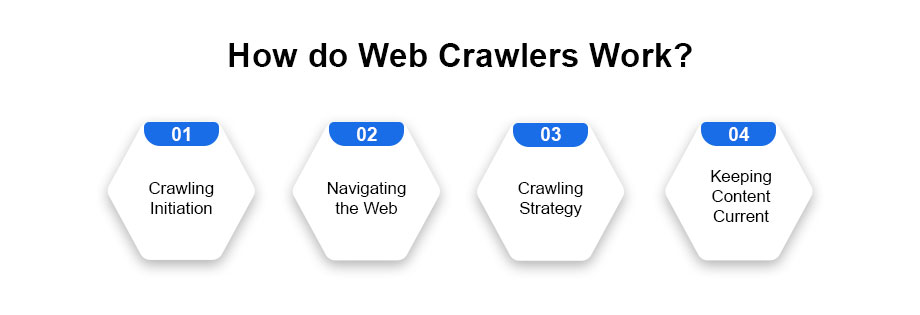
Start of the Journey: Crawling Initiation
Web crawlers do not just wander randomly; their journeys are highly calculated.
- Crawling Triggers: Web crawlers officially begin their journey the moment they receive a distinct signal from the search engine to go out and explore new or updated website content. This initiation process can be triggered by several factors, such as regular time intervals, or more directly, when a website owner submits a sitemap to search engines.
- Seed URLs: The crawling journey almost always begins with what are known as seed URLs. These are specific, highly trusted web addresses explicitly provided to the crawler to serve as starting points for their exploration. From these initial seeds, the crawler actively starts visiting other pages that are linked within the site.
Exploration & Discovery: Navigating the Web
Once a crawler lands on a web page, the real work begins.
- Following Links: The bot meticulously scans the page’s content looking for hyperlinks that point to other pages. These links act as digital pathways, guiding the crawler to entirely new destinations and rapidly expanding its reach across the wider web.
- Indexing Content: As the crawler explores these various pages, it diligently collects a wide array of data types, like text, images, meta tags, and links. All of this gathered information is then officially indexed, creating a massive, highly organized web content database that search engines can quickly analyze and retrieve later when a user performs a search.
Managing Depth & Breadth: Crawling Strategy
Search engines must be incredibly efficient with their computing resources.
- Depth of Crawling: Crawlers can choose to simply skim a website’s surface, focusing primarily on the homepage and major category sections, or they can choose to delve incredibly deep into absolutely every single page and subpage available. The specific depth of crawling directly impacts how comprehensively a site is ultimately indexed by the search engine.
- Breadth of Crawling: Conversely, some crawlers prioritize breadth. This means they focus on exploring a very wide range of different websites quickly. Others focus on depth by thoroughly and meticulously indexing fewer sites. To ensure comprehensive global web coverage, search engines utilize a strategic combination of these strategies.
Update & Refresh: Keeping Content Current
- Regular Recrawling: Websites are inherently dynamic entities, with content frequently being updated, modified, or added entirely. To stay relevant and current, crawlers must revisit previously indexed pages at regular, calculated intervals. This crucial step ensures that the final search results always reflect the latest information available on the web.
Directing Traffic: The Role of Robots.txt & Meta Tags
Website owners are not powerless; they can actually give direct instructions to these bots.
- Respecting Robots.txt: By using a simple text file called robots.txt, webmasters can explicitly instruct web crawlers on exactly which parts of a website to explore and which specific parts to completely avoid. This powerful file includes strict directives, like disallowing certain private pages or entire back-end directories from being crawled at all.
- Interpreting Meta Tags: Beyond the robots.txt file, crawlers also pay very close attention to specific meta tags embedded directly within the HTML code of web pages. For example, tags like “noindex” explicitly tell crawlers not to index specific pages into their database, while tags like “nofollow” instruct the bots not to follow certain links found on that page.
Why Web Crawlers Matter: Impact on Businesses
Web crawlers are absolutely crucial in shaping online visibility and defining search rankings for modern businesses. Understanding their profound impact is crucial for anyone navigating the complex world of websites and search engines.
Enhanced Online Visibility and Search Rankings
Web crawlers are the silent, tireless workers behind the scenes, indexing and organizing vast amounts of web content. By systematically scanning and indexing web pages, they make them discoverable to search engines like Google. This ensures that businesses’ websites actually appear in search results when a user types in relevant queries.
By ensuring that web pages are fully accessible and readable to crawlers, businesses can dramatically improve their chances of ranking much higher in search engine results pages (SERPs). This higher visibility directly translates into increased organic traffic and much higher potential for customer engagement.
Real-World Business Scenarios
- The eCommerce Boost: Consider an eCommerce business that regularly updates its product pages and meticulously optimizes them for search engine web crawlers. This business sees a significant, measurable boost in search engine rankings and overall online visibility. As a direct result of this optimization, the business experiences notably higher click-through rates and increased sales conversions.
- The Content Publisher: A blog website that consistently publishes well-researched, highly informative articles that are specifically optimized for specific target keywords naturally attracts more frequent web crawler visits. This consistent crawling leads to vastly increased organic traffic and heavily improved search rankings, which in turn increases their ad revenue and overall brand visibility.
- The News Outlet: A news website heavily relies on web crawlers to rapidly index breaking news stories. Because the crawlers find the content quickly, the site experiences a massive surge in traffic during major global events. By delivering these real-time updates efficiently, the website cements itself as a highly trusted source of information, seamlessly attracting more dedicated readers and advertisers.
- The Technical Fixer: An online retailer proactively identifies critical crawl errors by utilizing Google Search Console. They immediately resolve these issues by implementing proper redirects for broken links. As a direct result of removing these roadblocks, the website’s visibility significantly improves, ultimately leading to a much higher conversion rate and notably increased sales.
- The Strategic Marketer: A modern software company uses detailed web crawler data to successfully identify trending keywords within its specific industry. They quickly adjust their ongoing content strategy accordingly. This data-driven approach results in significantly higher website traffic and much more qualified leads, which ultimately increases their overall sales and market share.
Why Web Crawlers Matter for SEO: Crawl Budget Management
SEO, which fundamentally enhances your site for much better search engine rankings, relies heavily on making your individual pages highly accessible and perfectly readable to web crawlers. Crawling truly marks the initial, critical interaction with your pages, but continuous, ongoing crawling is essential to accurately reflect any updates you make and effectively maintain the freshness of your content over time.
Considering web crawler behavior as a strategic, proactive measure can significantly impact your overall visibility in search results and greatly improve the overall user experience. Let’s delve deeper into this relationship.
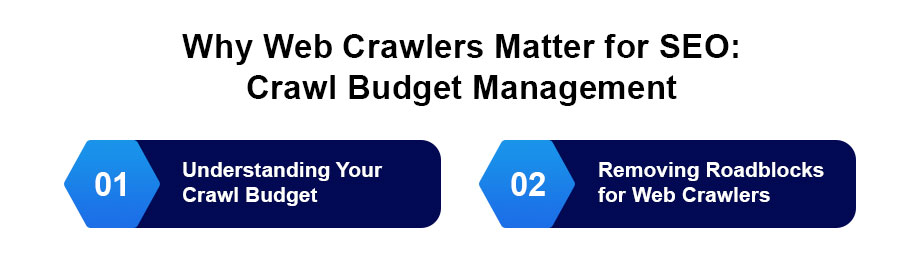
Understanding Your Crawl Budget
Ongoing web crawling is what allows your newly published pages to finally appear in search engine results pages (SERPs). However, it is vital to understand that Google and other major search engines have finite, limited resources explicitly allocated for crawling the web.
Google’s specific “crawl budget” essentially guides its bots on three main factors:
- How frequently to crawl your site
- Which specific pages to scan
- How much server pressure is deemed acceptable
Having a tightly managed crawl budget is incredibly crucial because excessive, unmanaged crawling activity—both by automated bots and actual human visitors—could easily overload your server and crash your site.
To ensure perfectly smooth site operation, you must understand two core concepts: crawl rate limit and crawl demand.
- The crawl rate limit carefully oversees the fetching activities on your site to explicitly prevent speed degradation or a massive influx of server errors. If you consistently encounter performance issues caused by Googlebot, you actually have the power to modify this limit directly within Google Search Console.
- Crawl demand, on the other hand, refers to Google’s and human users’ actual interest in your website. If your site lacks a substantial following or consistent traffic, Googlebot will simply not crawl it as frequently as it would more popular, high-demand sites. You should strongly consider optimizing your website with effective website design services to significantly enhance both your crawl demand and overall visibility.
Removing Roadblocks for Web Crawlers
While you want bots to find your great content, there are highly intentional methods used to actively prevent web crawlers from accessing certain specific pages. The truth is, not absolutely every page on your site should appear in SERPs. Implementing strategic crawler roadblocks can effectively safeguard sensitive, purely redundant, or completely irrelevant pages from accidentally ranking for keywords.
- The Noindex Tag: One highly common roadblock is using a “noindex” meta tag. This powerful tag strictly prevents search engines from indexing and ranking specific pages. Applying noindex is highly advisable for utility pages like admin login pages, post-purchase thank you pages, and internal site search result pages.
- The Robots.txt File: Another major roadblock is the classic robots.txt file. While rogue or malicious crawlers may not always strictly adhere to the directives laid out in robots.txt, this file is incredibly useful for managing your valuable crawl budget effectively with compliant bots like Googlebot.
If you want to master this, it is recommended to use professional SEO services to ensure the absolute comprehensive management of your website’s crawl budget and complex indexing directives for much further optimization.
While conquering the fast-paced online world with PPC ads is undoubtedly great, there’s another incredibly powerful strategy for long-term, sustainable success: winning at SEO on a budget.
How Can XCEEDBD Help in Website Crawling?
Crawlers play an absolutely key role in correctly indexing your site’s valuable pages, ultimately ensuring that search engines successfully discover and rank your hard-earned content.
Website crawling optimization is truly essential for absolutely any successful SEO strategy, and XCEEDBD can seamlessly help you harness this incredible power effectively. By proactively identifying technical gaps, properly optimizing deep crawling processes, and actively ensuring search engines quickly index all of your critical pages, we directly help your business drastically improve rankings, skyrocket organic traffic, and multiply conversions.
XCEEDBD has a proven track record of successfully helping businesses across diverse industries grow their presence online.
Ready to Optimize Your Crawl Budget?
Contact XCEEDBD today, and our expert website crawling services will make search engines work for you. Let’s boost your rankings now!
Frequently Asked Questions (FAQs)
1. What exactly is a web crawler? A web crawler, often known as a spider or bot, is an automated program that travels across the internet to visit websites, follow links, and gather data. Think of it like a digital librarian organizing massive amounts of information for search engines.
2. Why are web crawlers so important for my business? Web crawlers systematically index your website’s content, making it easily discoverable to search engines. If crawlers cannot access your site, your pages will simply not appear in search results, resulting in lost organic traffic and zero online visibility.
3. What is a “crawl budget”? A crawl budget refers to the finite resources (time and server capacity) that a search engine like Google allocates specifically for crawling your website. Optimizing this budget ensures that your most critical and profitable pages are crawled and updated much more frequently.
4. How do search engines know where to start crawling? Crawlers usually initiate their journey using “seed URLs,” which are highly trusted starting points. Additionally, when website owners proactively submit an XML sitemap to search engines, it directly triggers the bots to explore new or recently updated content.
5. Can I stop web crawlers from visiting certain pages? Yes. You can use a file known as robots.txt to strictly instruct crawlers on which specific directories or pages to avoid entirely. Additionally, applying a “noindex” meta tag explicitly tells search engines not to index that specific page in their search results, which is perfect for admin or thank you pages.
6. What are some examples of major search engine bots? The most famous is Googlebot (which handles mobile and desktop). Others include Bingbot for Microsoft Bing, Yandex Bot in Russia, Baiduspider in China, DuckDuckBot for DuckDuckGo, and Yahoo! Slurp.
7. How does a crawler discover new content? Once a crawler lands on a web page, it actively scans the text specifically looking for hyperlinks. By continuously following these internal and external links, the bot discovers entirely new web pages and dramatically expands its mapping of the internet.
8. How often will Googlebot crawl my website? This heavily depends on your site’s “crawl demand.” If your website produces high-quality content frequently and has strong user interest (high demand), Googlebot will crawl it much more often than a stagnant or highly unpopular site.