


Blockchain has the potential to disrupt healthcare, yet the industry remains filled with challenges and uncertainties. For many decision-makers, analyzing which blockchain healthcare use cases are most important—or how to prioritize resources in this emerging space—can be difficult.
The current healthcare landscape is plagued by security and privacy concerns. Data breaches are becoming more common, making security a top concern for both patients and providers. By utilizing blockchain technology, organizations can create a secure, decentralized platform for storing and sharing data.
Beyond security, blockchain can help reduce costs, improve efficiencies, and promote transparency within the industry. This guide offers insights into the top use cases worldwide, helping you analyze how to get ahead of the curve and drive better care outcomes.
Why Healthcare Needs a Blockchain Revolution
Before diving into specific projects, it is vital to understand the high-level benefits blockchain brings to medical infrastructure.
- Uncompromised Data Integrity: Data integrity is critical in healthcare. By storing data on a blockchain, you ensure it has not been tampered with or altered. Because each block is encrypted and linked to the previous one, the technology provides a permanent record of all data changes, which is essential for auditing.
- Decentralized Security: Sensitive patient data is often stored centrally, making it vulnerable. Blockchain allows for a distributed way of storing data across a network of computers, making it less vulnerable to hacks.
- Faster Transactions: Blockchain can speed up transactions, which is beneficial for doctors ordering prescriptions or streamlining claims processing and reimbursement.
- Improved Compliance: In a highly regulated industry, blockchain helps improve compliance by providing a tamper-proof, immutable data record. It is automatically helpful in tracking patient data and medical records.
- Traceability: Every patient must be accounted for, and equipment must be sterilized. Blockchain provides a secure, decentralized way to track patients and equipment, ensuring total traceability.
The Mechanics: How Blockchain Secures Health Data
To understand the value of these use cases, one must understand the underlying technology. A blockchain is essentially a digital ledger of transactions.
The Architecture of Trust
- The Block: Each block contains a cryptographic hash of the previous block, a timestamp, and transaction data.
- The Hash: The technology relies on strong cryptography. Hashes are used with public key encryption to securely store data. Crucially, hashing cannot be undone; once a record is entered, it cannot be altered without changing all following records.
- Distributed Network: The network isn’t stored on a centralized server but is spread across different computers on an encrypted peer-to-peer network.
- Shared Ledger: This provides a single source of truth. If multiple parties enter orders, they become part of the blockchain, allowing all parties to see the history and status.
Digital Transactions and Smart Contracts
All transactions are recorded transparently, making them fraud-resistant while maintaining privacy. Furthermore, “smart contracts” allow business contracts to be automatically executed when terms are met. This allows parties to transact anonymously without traditional intermediaries like lawyers or escrow agents, as everything is automated through code.
5 Game-Changing Blockchain Healthcare Use Cases
We have identified five compelling use cases that will likely take off in the coming years and dramatically impact the industry.
1. Patient-Controlled Electronic Health Records (EHR)
Project Example: MTBC
Data security is a massive crisis. According to a study by Critical Insight, data breaches against healthcare organizations increased by 84% from 2018 to 2021. This exposes sensitive information to exploitation.
Blockchain solves this by creating a secure, decentralized way to store medical records. It makes it complex for hackers to access information while giving patients more control.
- Seamless Sharing: Patients and doctors can share records securely without fear of hacking.
- Patient Access: Patients can grant permission to hospitals or labs to view specific health information (like allergy lists) from a smartphone app with just one click.
- Efficiency: This leads to better coordination between providers and fewer costly, redundant tests.
- Cost Reduction: Providers can reduce administrative costs related to storing paper copies, as interactions are recorded digitally.
2. Ensuring Drug Supply Chain Integrity
Project Example: Chronicled, MediLedger
With worldwide supply chains becoming increasingly complex, the need for transparency is growing. By creating an immutable record of a drug’s journey from manufacturer to patient, blockchain ensures patients receive safe, effective medications.
- Risk Mitigation: Supply chain integrity helps pharmaceutical companies avoid costly recalls and litigation.
- Source Tracking: Users can pinpoint the source of drugs to prevent suspicious or illegal activities like trafficking and tampering.
3. The War Against Counterfeit Drugs
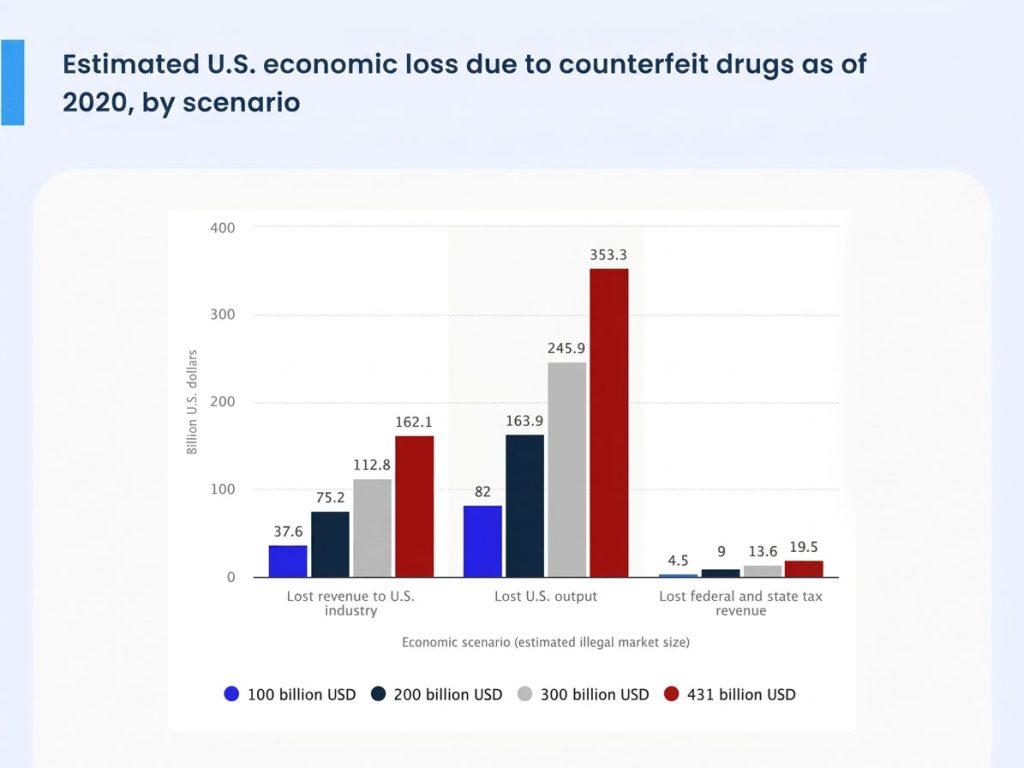
Project Example: FarmaTrust
The global pharmaceutical market is under constant threat from counterfeits, which are estimated to generate $200 billion in revenue. This puts patients at significant risk.
Blockchain technology allows medicines to be tagged with a QR code and stored on an immutable ledger.
- Provenance: When scanned by pharmacists, the code creates an unforgeable record, assuring the drug is real.
- Lifecycle Tracking: You can track the entire development cycle, from sourcing raw materials to packaging and distribution.
- Smart Contracts: These ensure transparency and accountability in case of quality control lapses.
- Inventory Management: Manufacturers can reduce inventory costs by selling based on production schedules using accurate blockchain forecasting rather than holding stock.
4. Streamlining Medical Credential Tracking
Entities Involved: Hashed Health
As medical credentials become digital, blockchain provides a secure, efficient, and cost-effective way to manage them. We predict more hospitals will use blockchain for this purpose in 2026 and beyond.
- Speed: Tracking credentials via blockchain facilitates quicker access to records and reduces waiting times in doctors’ offices.
- Permanence: By storing credentials on the blockchain rather than paper, records can never be lost or stolen.
- Savings: Significant sums can be saved that would otherwise be spent on hard copies prone to wear and tear.
5. Enhancing Enterprise Data Security
Project Example: Guardtime
Enhancing data security is one of the most common blockchain use cases. It facilitates the storage of sensitive data while offering an audit trail to detect fraud.
- Enterprise Adoption: Organizations, including the Department of Veterans Affairs (VA), are leveraging blockchain to secure data and processes. The VA has been integrating blockchain for distributed databases and clinical research since 2017.
- Keyless Infrastructure: Hospitals employ networks like Guardtime’s Keyless Signature Infrastructure (KSI) so patient data remains private yet shareable among authorized parties.
- Development: Hiring blockchain developers enables enterprises to build advanced systems that save time and money.
Conclusion: The Future of Decentralized Care
Blockchain healthcare use cases will grow exponentially over the next few years. With this technology, healthcare institutions can ensure their information is accurate and accessible while tracking credentials securely.
While blockchain-based solutions require higher investment, they can be tackled with proper planning. Outsourcing the project to established development partners allows you to experience affordable solutions while receiving mature support. Now is the time to start learning what this new technology offers.
Ready to secure your healthcare infrastructure?
Build Your Blockchain Solution Today Don’t let data breaches put your organization at risk. Contact our team to discuss custom blockchain development.
[Contact Us for a Consultation]
Frequently Asked Questions (FAQ)
1. How does blockchain ensure data integrity in healthcare? Data integrity is maintained because once a record is entered into the blockchain database, it cannot be altered without changing all following records. Each block is encrypted and linked to the previous one, creating a tamper-proof history.
2. Can blockchain help with prescription management? Yes. Blockchain speeds up transactions, making the process of ordering prescriptions faster for doctors and patients. It also streamlines claims processing and reimbursement.
3. What is a “Smart Contract” in healthcare? A smart contract is a self-executing digital agreement. In healthcare supply chains, it ensures transparency and accountability automatically when specific terms (like delivery or quality checks) are met, removing the need for intermediaries.
4. How does blockchain prevent counterfeit drugs? Medicines can be tagged with QR codes linked to an immutable ledger. When scanned by a pharmacist or doctor, this creates an unforgeable record of the drug’s journey from the manufacturer, proving it is genuine.
5. Is patient data publicly visible on the blockchain? No. While the ledger is shared, the data is secured using strong cryptography and public key encryption. Only someone with the private key can read the data, and patients can grant specific permissions for who views their records.
6. Are major healthcare organizations already using blockchain? Yes. The Department of Veterans Affairs (VA) has been working on integrating blockchain for distributed databases and clinical research management since 2017.