The landscape of retail has shifted permanently. It is no longer enough to simply have an online presence; your business must be mobile-first. Understanding the intricacies of mobile commerce is now a fundamental requirement for online business owners who wish to survive and thrive.
The data supports this shift unequivocally. According to Tidio, mobile retail eCommerce sales are projected to exceed $710 billion in 2026. This surge is driven not just by convenience, but by rapid innovations—such as Augmented Reality (AR) and AI-driven personalization—that play a significant role in enhancing shopping experiences.
With the dramatic increase in smartphone device purchases and the dominance of smartphone browsing, eCommerce businesses must prioritize mobile optimization to remain competitive. If you aren’t meeting your customers where they are—on their phones—you are leaving revenue on the table.
This guide explores the transformative power of M-Commerce, offering expert insights into innovative solutions and practical optimization strategies to drive sustained success for your brand.
What is M-Commerce?
M-Commerce, or Mobile Commerce, refers to the buying and selling of products and services via wireless internet connections using mobile handheld devices like smartphones and tablets. While it is a subset of eCommerce, it requires a unique approach to user experience (UX) and technical deployment.
M-Commerce encompasses a wide range of transactional activities, including:
- Mobile Shopping: Browsing and purchasing retail goods through mobile-optimized sites or dedicated apps.
- Mobile Banking: Managing finances and transactions via banking apps.
- Digital Payments: Using mobile wallets (like Apple Pay) for in-store or online purchases.
- E-Ticketing: Purchasing and storing tickets for travel or events on a device.
It allows customers to shop and transact securely and conveniently at any time and location. The increased use of smartphones, vastly improved mobile internet speeds (5G), and the proliferation of intuitive mobile apps have all contributed to the notable rise in M-Commerce in recent years.
The Strategic Importance of Mobile Commerce
For modern online businesses, mobile commerce is becoming a necessity, not an option. Integrating mobile commerce solutions offers distinct advantages that directly impact your bottom line.
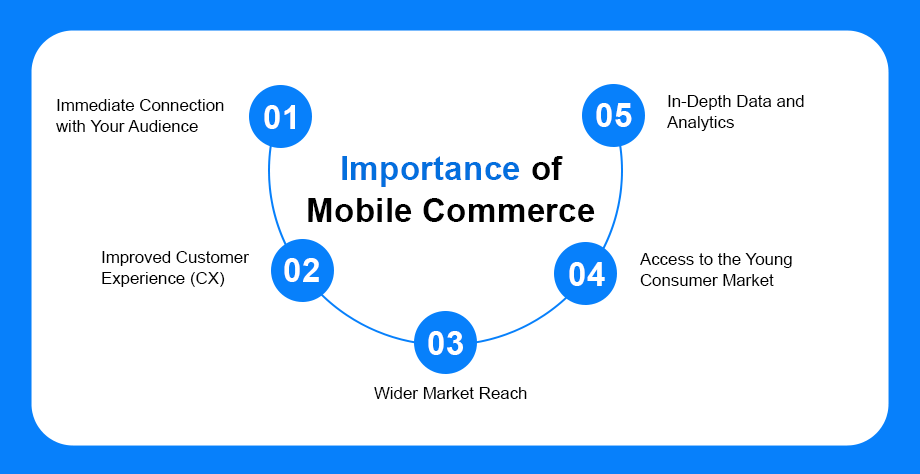
1. Immediate Connection with Your Audience
Mobile eCommerce provides companies a quick, direct channel to communicate with customers. Since smartphones are personal devices that are always within reach, users can access eCommerce mobile shopping platforms from anywhere—whether they are commuting, waiting in line, or relaxing at home.
This accessibility allows businesses to engage with their audience in real-time. By leveraging push notifications and location-based marketing, brands can tap into impulsive buying behaviors to boost sales instantly.
2. Improved Customer Experience (CX)
Mobile eCommerce is one of the most important contributions to enhancing customer experience. The modern consumer has little patience for friction. By optimizing websites and applications for mobile devices, businesses offer a smooth, user-friendly interface that makes it simple for customers to browse products, make purchases, and connect with the brand.
A pleasant, frictionless mobile shopping experience increases consumer satisfaction, fosters loyalty, and encourages repeat business—eventually fueling business expansion.
3. Wider Market Reach
Mobile Commerce solutions allow businesses to transcend geographical boundaries. Due to the growing popularity of affordable smartphones and mobile internet connectivity globally, businesses can now reach previously untapped customers who may not own desktop computers.
With mobile shopping apps, customers can shop whenever and wherever they want, allowing businesses to reach new clients outside of physical locations and traditional business hours.
4. Access to the Young Consumer Market
If your target demographic includes Millennials and Gen Z, M-Commerce is mandatory. This demographic increasingly relies on mobile devices for shopping and browsing. They are “digital natives” who trust mobile platforms for transactions. By optimizing online shopping for mobile, businesses effectively target and engage with this sizable, tech-savvy market segment.
5. In-Depth Data and Analytics
Mobile eCommerce platforms offer robust analytics tools that give businesses valuable insights into customer behavior. Mobile data is often more granular than desktop data, offering location insights and app usage patterns.
By examining mobile traffic, conversion rates, and user interactions, businesses can make well-informed decisions to refine their mobile purchasing experience. Comprehensive analytics help monitor the success of campaigns, pinpoint areas for development, and hone tactics to increase revenue.
7 Innovative Mobile eCommerce Solutions for 2026
Businesses are using cutting-edge mobile commerce solutions to improve the purchasing experience in the quickly changing landscape of ecommerce development. Here are the crucial technologies reshaping the industry:
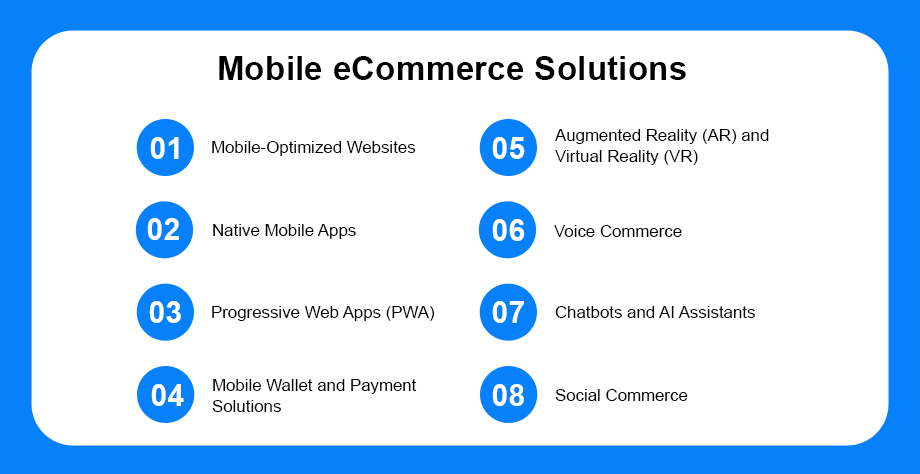
1. Mobile-Optimized Websites
A mobile-optimized website is the foundation of M-Commerce. These sites are designed to provide an optimal browsing experience for users accessing the site from handheld devices.
Crucially, these websites use Responsive Design, meaning they automatically adjust their layout, content, and imagery according to the screen size and capabilities of the device.
- Example: A clothing retailer might create a mobile-optimized site with a “sticky” Add-to-Cart button at the bottom of the screen, larger touch targets for easy tapping, and a simplified “hamburger” navigation menu to save screen real estate.
2. Native Mobile Apps
Mobile apps are specialized programs made exclusively for operating systems like iOS and Android. They generally offer a faster, more engaging experience than mobile websites.
- Key Features: Mobile app development services frequently include native features like biometric login (FaceID), one-click checkout, and push notifications.
- Use Case: A meal delivery business utilizes a mobile app to let customers track deliveries in real-time via GPS—a feature difficult to replicate smoothly on a mobile website.
3. Progressive Web Apps (PWA)
Progressive Web Apps are a hybrid solution. They are websites that run inside a user’s browser but use modern web technologies to function like native apps.
PWAs are perfect for mobile eCommerce because they offer:
- Offline Capabilities: Users can browse previously loaded pages even without an internet connection.
- Push Notifications: Re-engage users just like a native app.
- No Download Required: Users don’t need to visit an App Store to “install” them.
- Success Story: Starbucks created a PWA that allows users to browse the menu and customize orders with barely any data usage. The PWA provides a fluid, responsive experience with location-based services and “favorites” for easy reordering.
4. Mobile Wallet and Payment Solutions
Friction at checkout is the number one killer of mobile conversions. Mobile wallets streamline this process significantly. Popular solutions include Apple Pay, Google Pay, and Samsung Pay.
These options allow customers to safely store their credit or debit card details on their devices. When it’s time to pay, they verify with a fingerprint or face scan rather than typing in a 16-digit card number. Many eCommerce consulting services recommend integrating these wallets to lower user friction and cart abandonment.
5. Augmented Reality (AR) and Virtual Reality (VR)
AR and VR technologies completely change mobile eCommerce marketing by providing immersive purchasing experiences. They bridge the gap between the physical and digital worlds.
- IKEA Place: The furniture giant created an AR app that enables consumers to see furniture in their homes before purchasing. By aiming their smartphone camera at a specific area, users can virtually place a sofa or table to see if it fits and complements the decor.
- Sephora Virtual Artist: Sephora’s AR tool allows customers to use their front-facing camera to virtually “try on” different shades of lipstick or eyeshadow.
- The Benefit: These tools reduce return rates by giving customers confidence in their purchase.
6. Voice Commerce
Also known as conversational commerce, Voice Commerce allows consumers to shop using virtual assistants such as Apple’s Siri, Google Assistant, and Amazon Alexa.
- Example: A user can issue a voice command to an Amazon Echo device to “reorder paper towels,” or use Walmart’s voice shopping function via Google Assistant to add groceries to their cart hands-free.
- Future Outlook: As voice recognition technology advances, customized recommendations based on voice queries will become a major driver of sales.
7. Chatbots and AI Assistants
Chatbots are AI-driven virtual assistants that communicate with users via messaging interfaces in real-time. They are essential for providing instant customer service on mobile devices where navigating an FAQ page is cumbersome.
- Personalization: A clothing retailer’s chatbot might ask a customer about their preferred style, size, and occasion, and then recommend a curated list of outfits.
- Efficiency: Chatbots provide smooth, 24/7 interactions, expediting service and driving conversions without human intervention.
8. Social Commerce
Social commerce refers to the integration of eCommerce capabilities directly into social media networks. It turns engagement into sales without the user ever leaving the app.
- Implementation: Platforms like Instagram, Facebook, and Pinterest provide features like product tags and shoppable posts. A cosmetics company can share a picture of a new lipstick on Instagram with a tag that allows viewers to click and buy immediately.
- Why it works: It capitalizes on social proof and reduces the steps to purchase, making it a vital mobile eCommerce option for future-focused businesses.
Essential Tips for Mobile eCommerce Optimization
Knowing the solutions is one thing; implementing them effectively is another. To thrive in the online market, you must rigorously optimize your strategy. Here are essential technical tips to create a superior mobile buying experience.
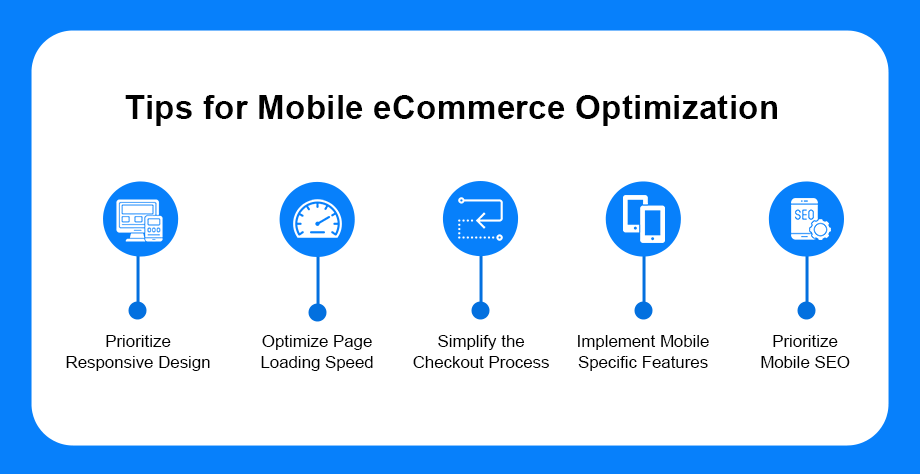
1. Prioritize Responsive Design
It is impossible to compromise on responsive design when it comes to eCommerce. Your website must fluidly adapt to match various screen sizes—from small smartphones to large tablets.
If you are using a CMS like WordPress:
- Choose a Mobile-First Theme: Select a mobile-responsive WordPress theme designed specifically for eCommerce.
- Customize: Use the WordPress Theme Customizer to modify image scaling, button positions, and font sizes specifically for mobile views.
- Touch Targets: Ensure buttons are large enough to be tapped with a thumb without accidentally hitting neighboring links.
2. Optimize Page Loading Speed
Speed is the currency of the mobile web. Loading speed is one of the most critical factors for user experience and SEO. Smartphone users are often on unstable data connections; if your site takes more than 3 seconds to load, they will navigate away to a competitor or back to social media.
Slow speeds lead directly to cart abandonment and user frustration. Implement these strategies to increase speed:
- Optimize Images: High-resolution product photos can cause significant lag. Use plugins like Smush or EWWW Image Optimizer to compress images without compromising visual quality.
- Minimize HTTP Requests: Reduce the number of elements (scripts, stylesheets, images) your site requests from the server. Consider merging or minifying files.
- Use Caching: Plugins like WP Rocket, WP Super Cache, or W3 Total Cache can store static versions of your site to serve them faster to visitors.
- Content Delivery Network (CDN): A CDN distributes your content across servers worldwide. This ensures that a user in New York and a user in London both load your site from a server geographically close to them.
- Testing: Use Google PageSpeed Insights regularly to assess performance and identify bottlenecks.
3. Simplify the Checkout Process
The checkout page is where most mobile sales are lost. Typing on a small glass screen is tedious.
- Guest Checkout: Always provide a guest checkout option. Forcing account creation is a major conversion killer.
- Digital Wallets: As mentioned earlier, integrate PayPal, Apple Pay, and Google Pay. If you use WordPress, Easy Digital Downloads or WooCommerce connect easily with Stripe and PayPal Commerce to support these mobile-native payment methods.
- Minimal Fields: Ask only for essential information. Use auto-fill capabilities for addresses to save the user from typing.
4. Implement Mobile-Specific Features
Don’t just shrink your desktop site; design for the mobile context.
- Navigation: Complex mega-menus are a nightmare on mobile. Use a simple, collapsible navigation bar.
- Interactivity: Give consumers the option to swipe through product photos (carousel style) rather than clicking tiny arrows.
- Pop-ups: Be very careful with pop-ups. Google penalizes “intrusive interstitials” that cover the main content on mobile. Ensure any pop-ups or push alerts are easy to close.
5. Prioritize Mobile SEO
Mobile consumers frequently conduct searches with high purchase intent (e.g., “shoe store near me”).
- Search Functionality: Mobile screens are small, so the search bar is vital. Use a plugin like SearchWP to make your search bar prominent and accurate. Consider adding autocomplete functionality to help users find products without perfect spelling.
- Scannable Content: Optimize your content for mobile reading. Use short paragraphs, bullet points, and headers.
- Local SEO: If you operate a physical store, leverage Local SEO. Optimize your Google My Business profile and use location-specific keywords.
- Structured Data: Use schema markup to give search engines detailed information about your products (price, availability, ratings). This increases the likelihood of appearing in “Rich Snippets” on mobile search results.
Final Words
If you want to provide customers with a consistent, enjoyable online buying experience that increases traffic and helps improve website revenue, you must optimize your eCommerce website for mobile users. It is a continuous process of testing, analyzing, and refining.
Regular testing and mobile eCommerce optimization are essential to ensure that your website remains responsive to changing user demands and continues to function efficiently on the devices your customers use most.
Need Help Scaling Your Operations?
While frontend optimization drives sales, backend efficiency delivers customer satisfaction. XCEEDBD can be the ideal partner if you want to grow your eCommerce online shopping business with dependable logistical solutions. We can help revolutionize your logistics needs and elevate your company’s operations to match your mobile commerce sales growth.
Frequently Asked Questions (FAQ)
1. What is the difference between eCommerce and M-Commerce? eCommerce covers all online commercial transactions, including those on desktop computers. M-Commerce (Mobile Commerce) is a specific subset focused solely on transactions conducted via mobile devices like smartphones and tablets.
2. Why is a PWA better than a regular mobile website? A Progressive Web App (PWA) offers a faster, app-like experience within a browser. Unlike standard sites, PWAs can work offline, send push notifications, and load instantly, leading to higher engagement rates.
3. How does page speed affect mobile sales? Page speed is critical. Studies show that conversion rates drop significantly with every second of delay. Mobile users are impatient; a slow site leads to high bounce rates and cart abandonment.
4. Is it necessary to have a mobile app for my online store? Not always. A highly optimized mobile website or PWA can often serve the same purpose. However, if you rely on heavy personalization, loyalty programs, or offline features, a dedicated mobile app may be worth the investment.
5. How can I improve my mobile checkout conversion rate? Simplify the form fields, offer “Guest Checkout,” and integrate one-tap payment solutions like Apple Pay, Google Pay, and PayPal to minimize typing friction.
6. What is “Social Commerce”? Social commerce is the practice of selling products directly through social media platforms (like Instagram or TikTok) using shoppable posts and tags, allowing users to buy without leaving the social app.