In the ever-evolving digital world, staying ahead in eCommerce is critical. To boost sales and grow your business in 2026, it’s essential to adopt cutting-edge eCommerce development strategies. This article explores actionable insights and strategies that will help you optimize your online business for success. Whether you’re a startup or an established enterprise, implementing the right tactics can unlock significant growth potential.
Key Takeaways:
- Expand your reach and tap into global markets.
- Improve operational efficiency through eCommerce solutions.
- Enhance customer experience to drive satisfaction and loyalty.
Why Businesses Should Invest in eCommerce Development
In 2026, eCommerce continues to dominate the retail landscape, and businesses of all sizes must harness its power to thrive. According to industry statistics, 20.1% of retail sales are expected to occur online, highlighting the growing significance of eCommerce. For businesses, investing in robust eCommerce development strategies is not just an option but a necessity to remain competitive.

1. Reach a Global Audience
Is your business limited to a local customer base? By adopting eCommerce development solutions, you can break geographical boundaries and reach customers worldwide. This expansion leads to greater market opportunities and increased revenue potential.
2. Availability 24/7
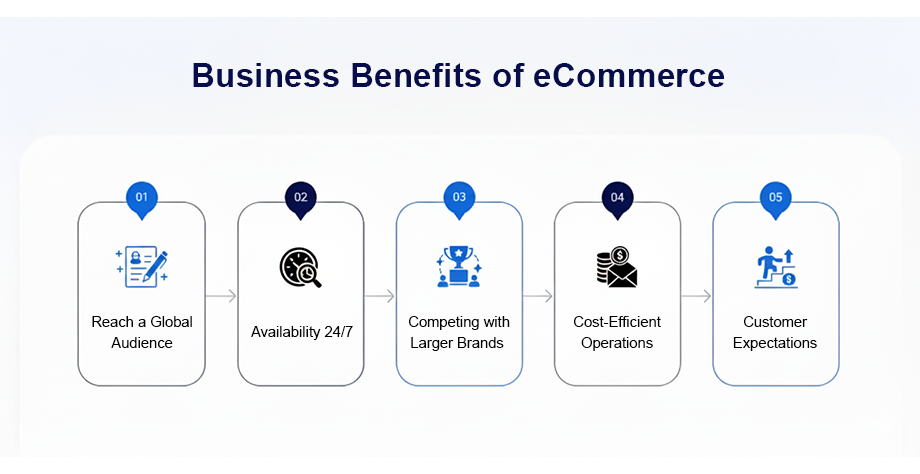
With eCommerce, your store is open around the clock, allowing customers to shop at their convenience. This constant accessibility not only improves customer satisfaction but also boosts sales, even outside of traditional business hours.
3. Competing with Larger Brands
Small and medium-sized businesses often feel overshadowed by larger competitors. However, eCommerce development levels the playing field, giving these businesses the ability to compete with big brands. By leveraging targeted strategies, small businesses can stand out and attract customers effectively.
4. Cost-Efficient Operations
eCommerce streamlines business operations, reducing overhead costs associated with traditional retail. Through automation, efficient inventory management, and digital marketing, businesses can cut unnecessary expenses while boosting profitability.
5. Meeting Customer Expectations
Today’s customers demand seamless online shopping experiences. Investing in eCommerce development ensures you meet these expectations with smooth navigation, secure transactions, and personalized services, resulting in higher customer loyalty and repeat business.
Top eCommerce Marketing Strategies for 2026
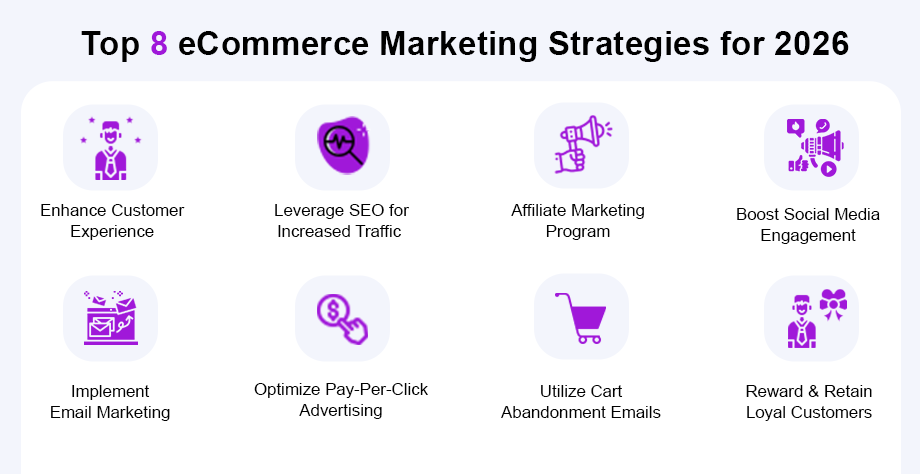
It’s no longer just about selling products online; it’s about creating a memorable experience for customers. As the saying goes, “People will forget what you said, forget what you did, but they will never forget how you made them feel.” Let’s explore some powerful marketing strategies that will help your eCommerce store stand out and boost sales in 2026.
1. Enhance Customer Experience
Customer experience is at the heart of a successful eCommerce business. Happy customers are more likely to return and recommend your store to others, resulting in repeat business and organic growth. Here’s how to elevate your website’s customer experience:
- Simplify Navigation: Organize product categories and menus logically to make it easier for customers to find what they’re looking for.
- Streamline Checkout: A quick and simple checkout process reduces friction and cart abandonment.
- Optimize for Mobile: Ensure that your website is mobile-friendly to cater to the growing number of users shopping via smartphones and tablets.
- Clear Calls-to-Action (CTAs): Guide customers through the purchase process with prominent and clear CTAs.
- Guest Checkout Option: Allow customers to complete purchases without the need for account creation.
- Live Chat Support: Provide real-time assistance to resolve customer queries instantly.
2. Leverage SEO for Increased Traffic
To maximize sales, your website must rank high on search engines. Implementing SEO strategies can drive more organic traffic to your site. Here are essential eCommerce SEO tactics:
- Keyword Research: Use tools like Google Keyword Planner to identify high-traffic, low-competition keywords relevant to your niche.
- On-Page Optimization: Ensure meta titles, descriptions, and headings include targeted keywords.
- Mobile Optimization: A mobile-friendly design is crucial as more shoppers use smartphones.
- High-Quality Content: Regularly update product descriptions, blogs, and other content to keep it fresh and engaging.
- Backlink Building: Gain authority by building high-quality backlinks from reputable sites.
- Local SEO: For local businesses, optimize for local searches and create a Google My Business profile.
3. Affiliate Marketing Program
Affiliate marketing is an effective way to increase sales by partnering with affiliates who promote your products in exchange for a commission. Here’s how to set up a successful affiliate marketing program:
- Set Clear Goals: Define what you want to achieve through affiliate marketing (e.g., sales, brand exposure).
- Choose the Right Partners: Select affiliates whose audience aligns with your brand.
- Provide Marketing Materials: Equip affiliates with banners, links, and other promotional content.
- Track Performance: Use analytics to measure the success of your affiliate program and adjust as needed.
4. Boost Social Media Engagement
Social media platforms offer tremendous opportunities to engage with customers and promote products. Here’s how to leverage social media for marketing success:
- Content Creation: Share visually appealing content like product photos, videos, and user-generated content.
- Consistent Posting: Maintain a regular posting schedule to stay visible to your audience.
- Engage with Followers: Respond to comments and messages to foster stronger relationships with your audience.
- Contests & Giveaways: Host contests to encourage user participation and boost brand visibility.
- Collaborate with Influencers: Partner with influencers to reach a wider audience and build credibility.
5. Implement Email Marketing
Email marketing remains one of the most powerful tools to boost eCommerce sales. Here’s how to leverage email marketing effectively:
- Offer Sign-Up Incentives: Encourage users to subscribe to your email list with discounts or exclusive offers.
- Engaging Email Campaigns: Craft compelling subject lines and concise, valuable content.
- Use Automation: Set up automated email sequences for follow-ups, promotions, and reminders.
6. Optimize Pay-Per-Click Advertising
PPC advertising is a quick way to drive targeted traffic to your site. To make the most of PPC, follow these tips:
- Target the Right Platform: Advertise on platforms where your target audience spends most of their time (e.g., Google Ads, Facebook).
- Create Compelling Ads: Craft engaging ad copy with clear offers or promotions.
- Optimize Landing Pages: Ensure that your landing pages match the ad’s message and provide a seamless experience for users.
7. Utilize Cart Abandonment Emails
Cart abandonment is a common issue, but you can recover lost sales through effective cart abandonment emails. Here’s how:
- Understand Why Customers Abandon Carts: Identify the reasons for abandonment, such as high shipping costs or complicated checkout processes.
- Send Persuasive Emails: Use personalized content and clear CTAs to remind customers of their abandoned items.
- Offer Incentives: Discounts or free shipping can encourage customers to complete their purchase.
- Provide Support: Include contact details or links to customer service in your emails to address any concerns.
8. Reward & Retain Loyal Customers
Customer retention is as important as customer acquisition. Implementing loyalty programs and personalized offers can help keep customers engaged:
- Loyalty Programs: Offer rewards like discounts or points for repeat purchases.
- Personalized Offers: Use customer data to send targeted promotions based on previous buying behavior.
- Exclusive Content: Provide VIP customers with early access to new products or special events.
Final Thoughts
Incorporating these eCommerce development strategies will not only help you maximize sales in 2026 but also set your business up for long-term growth and success. Stay ahead of the competition by focusing on customer experience, leveraging SEO, and utilizing the power of digital marketing.
To take your eCommerce business to the next level, consider partnering with experienced developers who can guide you in building an optimized, user-friendly online store.