The ride-hailing industry has fundamentally shifted how the world moves. Giants like Uber and Lyft didn’t just create apps; they engineered a new economic benchmark, encouraging startups worldwide to enter the mobility market. According to recent market analysis, the global online taxi services market is experiencing exponential growth, projecting a compound annual growth rate (CAGR) of over 22%.
For entrepreneurs and fleet owners, the question isn’t just about how to start a taxi business—it is about how to monetize it effectively. How does a platform like Uber generate $11.1 billion in revenue? What specific mechanisms turn a ride request into a profitable transaction?
This guide breaks down the successful revenue models, operational workflows, and monetization channels that drive the modern on-demand taxi industry.
The Ecosystem: Who Powers the Taxi Business?
Before diving into the financials, it is critical to understand the key stakeholders. A successful taxi platform creates a symbiotic relationship between three distinct user groups.
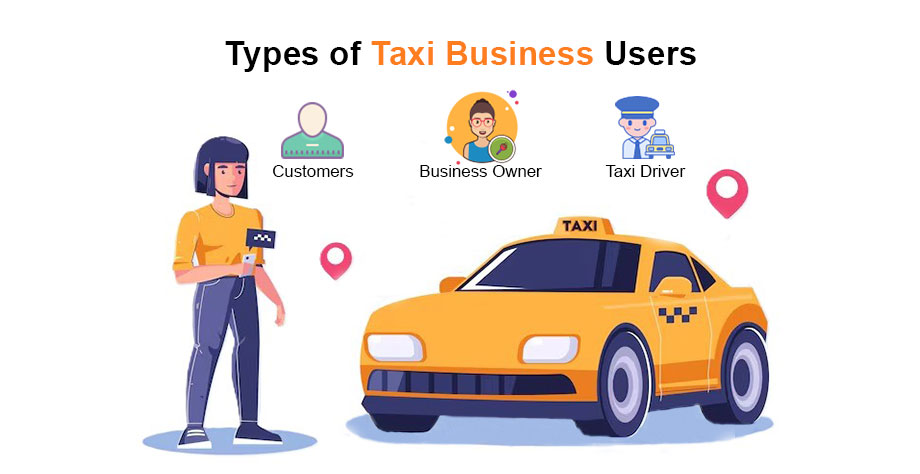
1. The Business Owners (The Admins)
You, the platform owner, sit at the top of the hierarchy. The platform provides a source of income by connecting supply (drivers) with demand (riders). Whether you are an individual entrepreneur or a taxi company, your role is to manage the dispatch system, buy licenses, recruit drivers, and maintain the technological infrastructure.
2. The Taxi Drivers (The Service Providers)
Drivers are the backbone of the industry. They generate the actual revenue by transporting passengers. In a modern app-based model, drivers rely on your platform to receive consistent trip requests, process payments, and navigate routes efficiently.
3. The Customers (The Demand)
Without passengers, the model fails. Customers drive the demand curve. They require reliability, safety, and convenience. Understanding their behavior—whether they are daily commuters, corporate clients, or tourists—is essential for segmenting your revenue streams.
The Workflow: How the On-Demand Model Operates
To monetize the service, the operational flow must be seamless. Here is how the three segments interact within a typical taxi booking app:
- The Customer Experience: A user opens the app, enters a destination, and views available drivers. They see an estimated time of arrival (ETA) and a fare estimate. Once they request a ride, they can track the driver in real-time and receive notifications upon arrival.
- The Driver Experience: Drivers receive ride requests via their mobile app. They can accept or reject the job based on the pickup location and potential earnings. The app guides them to the passenger, tracks the trip, and processes the payment instantly upon completion.
- The Dispatch/Admin Role: The owner utilizes a central dashboard (dispatch system) to oversee all active trips. This system ensures there is at least one driver available per vehicle (if fleet-owned) and manages the database of ride history, pricing rules, and customer support records.
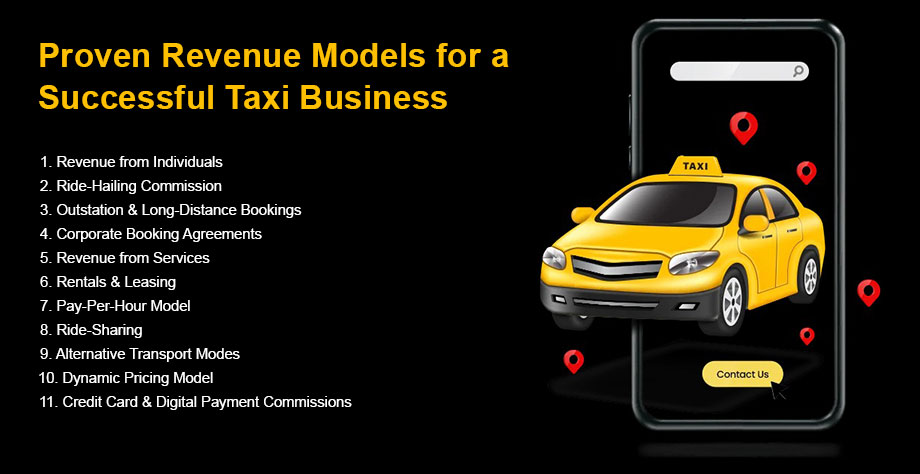
11 Proven Revenue Models for a Successful Taxi Business
There isn’t a “one size fits all” approach to monetization. Successful platforms often combine multiple revenue streams. Below are the primary models used by industry leaders.
Core Commission Models
1. Revenue from Individuals (Standard Commission) This is the most popular model. When an individual books a ride, the platform charges a commission fee.
- How it works: The platform takes a percentage (typically 20% to 25%) of the total fare, while the driver retains the rest.
- Variation: Commission rates can vary based on group size. For example, a standard solo booking might carry a 20% commission, whereas larger groups (requiring larger vehicles) might see adjusted margins to remain competitive.
2. Ride-Hailing Commission Similar to the standard model but specifically for peer-to-peer services (like Uber or Lyft). The app connects private car owners with riders.
- The rate: Commissions here fluctuate between 25% to 35%, covering the cost of background checks, insurance, and app maintenance.
3. Outstation & Long-Distance Bookings Local trips have low margins; long-distance trips offer high value.
- The strategy: When users book rides for out-of-town trips, the total fare is significantly higher. Platforms often charge a higher commission (around 30%) on these high-ticket transactions because the driver is guaranteed a substantial fare for a single booking.
Corporate & B2B Models
4. Corporate Booking Agreements Corporate mobility is a massive revenue stream. Companies need dedicated transport for employees, airport transfers, and client meetings.
- The benefit: These are high-volume, reliable contracts.
- The model: Platforms provide a dashboard for companies to book rides for staff. The platform typically charges a fixed commission of around 25% on these corporate accounts, often billed monthly.
5. Revenue from Services (Business Providers) This model targets other service providers (e.g., hotels, event organizers) who book cabs on behalf of their guests.
- The rate: Since these are B2B transactions ensuring a steady flow of high-quality customers, commission rates can be set around 25%.
Asset & Rental Models
6. Rentals & Leasing If your business owns the fleet, you can lease vehicles to drivers who don’t own cars.
- The model: You charge a daily or weekly rental fee for the vehicle, plus a smaller commission (e.g., 10%) on the rides they generate using your app. This secures passive income from the asset itself.
7. Pay-Per-Hour Model Instead of paying per km/mile, customers rent a cab and driver for a specific duration.
- Use case: Ideal for shoppers or tourists making multiple stops.
- Revenue: The commission is usually capped (approx. 20%), but the total booking value is higher due to the guaranteed time block.
Specialized & Alternative Models
8. Ride-Sharing (Carpooling) This allows multiple passengers heading in the same direction to split the fare.
- Pros/Cons: It lowers the cost for the user but requires high volume to be profitable for the driver.
- Revenue: Platforms usually take a standard cut (approx. 25%), but efficiency increases as one car services multiple paying customers simultaneously.
9. Alternative Transport Modes Forward-thinking platforms are integrating non-car options, such as waterways (boat taxis) or bike taxis.
- The model: For niche transport methods, commissions can be higher (up to 30%) due to a lack of competition in that specific vertical.
10. Dynamic Pricing Model While often considered a strategy, some apps run purely on dynamic pricing where there is no fixed rate card. Prices are entirely algorithmic based on real-time fleet management and efficiency.
11. Credit Card & Digital Payment Commissions When users pay via credit card or digital wallet, the platform processes the transaction.
- The revenue: Platforms can charge a small processing fee or retain a percentage (15%–20%) of the transaction facilitation, ensuring secure payments for the driver.
Strategic Revenue Channels: How to Maximize Income
Beyond the core models, successful cab services utilize specific channels and tactics to optimize revenue generation.
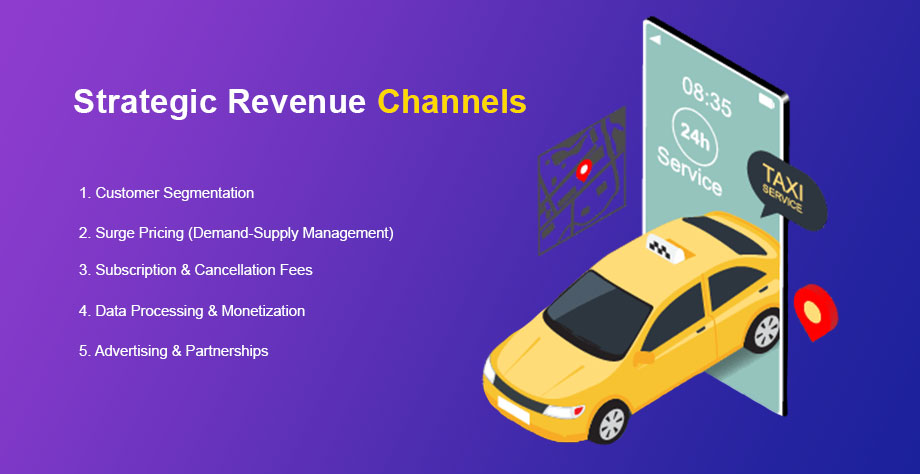
1. Customer Segmentation
Smart platforms don’t treat all users the same. By segmenting customers based on age, gender, profession, income, and location, you can tailor your services.
- Impact: This allows for tiered pricing (e.g., “Premium” cars for high-income segments vs. “Economy” for students). It ensures your pricing strategy is proportional to what each group is willing to pay.
2. Surge Pricing (Demand-Supply Management)
This is the most famous revenue booster in the industry.
- How it works: During peak hours, bad weather, or holidays, demand exceeds supply. The algorithm automatically increases the fare.
- Benefit: This incentivizes drivers to come online (increasing supply) and filters for customers who truly need the ride. The platform earns significantly more per ride during these windows without losing money on idle cars.
3. Subscription & Cancellation Fees
To reduce “no-shows” and wasted fuel:
- Cancellation Fees: If a customer cancels after a driver has been assigned and is en route, a fee is charged. This compensates the driver and the platform.
- Subscriptions: Some platforms now offer monthly subscriptions (e.g., “Uber Pass”) where users pay a flat monthly fee for reduced ride rates. This guarantees recurring revenue regardless of ride volume.
4. Data Processing & Monetization
Taxi apps collect immense amounts of data: travel times, preferred locations, and traffic patterns.
- Utility: This data helps streamline operations, prioritizing high-value areas. In some jurisdictions, anonymized traffic data can be a valuable asset for urban planning partnerships.
5. Advertising & Partnerships
Your app is a piece of digital real estate.
- In-App Ads: You can run targeted ads for local businesses (restaurants, events) to riders while they are in transit.
- Promotional Collaborations: Partnering with brands for promo codes or discounts increases user acquisition. For example, a credit card company might subsidize rides for its cardholders, bringing you volume while the partner covers the cost.
Cost Analysis: Developing Your Platform
Understanding revenue is half the battle; understanding cost is the other. Developing a robust taxi app like Uber involves complex backend engineering, GPS integration, and payment gateway security.
Estimated Development Costs Costs vary wildly based on features, complexity, and the region of your developers. However, for a standard Android taxi booking app, industry estimates suggest:
- Starting Baseline: ~$10,000 – $12,000.
- Hourly Rates: Often calculated around $20-$50 per developer hour depending on the region (e.g., India vs. US).
What drives the cost up?
- iOS + Android (Hybrid vs Native)
- Advanced Admin Panels
- Real-time analytics
- In-app chat/calling features
Note: Always consult with a professional mobile app development company to get an accurate quote based on your specific feature set.
Conclusion
The taxi business remains a lucrative opportunity for investors and entrepreneurs. The demand for convenient, on-demand transport is not fading; it is evolving. Whether you choose a commission-based model, a corporate leasing structure, or a hybrid approach, success depends on execution.
The future of your taxi business relies on how efficiently you implement these revenue models and how well your technology serves the end-user. If you have the vision and are ready to enter the market, now is the time to build.
Ready to Build Your Taxi Empire?
Don’t let technical hurdles stop your business growth. At XceedBD, we specialize in turning complex business models into intuitive mobile applications.
Get a Free Quote Today Ready to launch?
Contact our team of expert developers for a custom consultation on your taxi app project. Contact Us Now
FAQs
Q: What is the most successful revenue model for a taxi business?
A: The commission-based model is the most widely used and successful. It is scalable because you only earn when a ride takes place, minimizing risk for both the driver and the platform.
Q: How much does it cost to develop a taxi app like Uber?
A: A basic version can start around $10,000 to $12,000. However, a fully featured app with iOS and Android versions, driver apps, and a comprehensive admin panel can cost significantly more depending on complexity.
Q: Why is the online taxi business considered successful?
A: It solves a core problem: uncertainty. It provides reliability, safety, and price transparency for riders while offering flexible income for drivers. This double-sided value proposition drives high adoption rates.
Q: Can I make money from a taxi app without owning cars?
A: Yes. This is the “aggregator” model (like Uber). You own the software and the brand, while individual drivers with their own vehicles provide the service. You earn a commission on every ride they complete through your app.
Q: What is surge pricing?
A: Surge pricing is a dynamic pricing strategy where fares increase during periods of high demand (e.g., rush hour or rain). It helps balance supply and demand by encouraging more drivers to get on the road.
Q: What are the requirements to use a taxi booking app?
A: For customers, all that is required is a smartphone with an internet connection and a valid payment method (credit card, debit card, or cash option).