


The software landscape has shifted permanently. The era of purchasing expensive, one-time licenses and installing bulky software on local servers is largely behind us. In its place, Software as a Service (SaaS) has emerged as the dominant delivery model for modern business technology.
For entrepreneurs and enterprise leaders, the question is no longer if they should leverage cloud technology, but how.
Building a SaaS product offers incredible opportunities: recurring revenue, global scalability, and the ability to update your product instantly for all users. However, the path to a successful launch is riddled with challenges. From selecting the right tenancy architecture to minimizing churn, the decisions you make early in the development lifecycle will define your product’s longevity.
This comprehensive guide explores the “to build or not to build” decision matrix, the technical roadmap for execution, and the strategic nuances of launching a profitable SaaS application in the current market.
The State of the SaaS Market: Why Build Now?
Before committing capital to code, it is vital to understand the market trajectory. SaaS is not just a trend; it is the operating system of the modern economy.
Global Market Overview
The numbers tell a compelling story of sustained growth. According to recent data from Statista:
- Current Revenue: The SaaS market generated approximately US$258.60 billion in revenue in 2023.
- Projected Growth: Revenue is projected to expand at a compound annual growth rate (CAGR) of 7.69%.
- Future Volume: By 2028, the market volume is expected to hit US$374.50 billion.
- Investment per Employee: The average expenditure per employee in the SaaS industry reached US$74.29 in 2023.
What This Means for Your Business
These statistics indicate that market saturation has not yet been reached. While major players like Salesforce and Microsoft dominate general productivity, there is a massive “blue ocean” opportunity for Vertical SaaS—niche solutions designed for specific industries (e.g., SaaS for dentistry, SaaS for construction logistics, or SaaS for compliance management).
Organizations that move now to digitize their unique IP (Intellectual Property) into a SaaS platform are positioning themselves to capture a slice of this $374 billion pie.
Is SaaS Right for You? The Strategic Advantage
Why are businesses pivoting from traditional service models or on-premise software to SaaS? The answer lies in the business model’s inherent efficiency and valuation multiples.
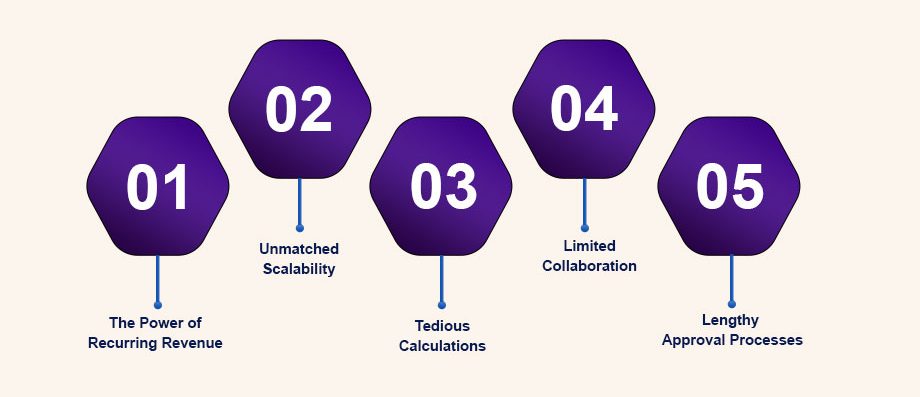
1. The Power of Recurring Revenue
The most attractive aspect of SaaS product development is the subscription model.
- Predictability: Unlike one-off project fees, SaaS provides Monthly Recurring Revenue (MRR). This allows for better cash flow forecasting and budget planning.
- Valuation: Investors and potential acquirers value SaaS companies at higher multiples because the revenue is recurring and cumulative.
2. Unmatched Scalability and Flexibility
Traditional software requires physical installation or manual updates on every client machine. SaaS lives in the cloud.
- Instant Scaling: If your user base grows from 100 to 10,000 overnight, a well-architected cloud infrastructure (using AWS, Azure, or Google Cloud) can auto-scale to handle the load.
- Global Reach: Your product is accessible to anyone with an internet connection, removing geographical barriers to entry.
3. Cost-Efficiency and Rapid Deployment
- Lower Entry Barrier for Clients: Customers do not need to invest in expensive hardware or servers. They simply log in. This reduces sales friction.
- Centralized Maintenance: Your development team maintains one codebase. When you push an update or a security patch, every single user gets it instantly. This significantly reduces the “IT burden” of supporting multiple versions of legacy software.
Categorizing the Market: Types of SaaS Applications
SaaS is a broad term. To build a successful product, you must define which category your solution fits into. This determines your features, your pricing, and your sales strategy.
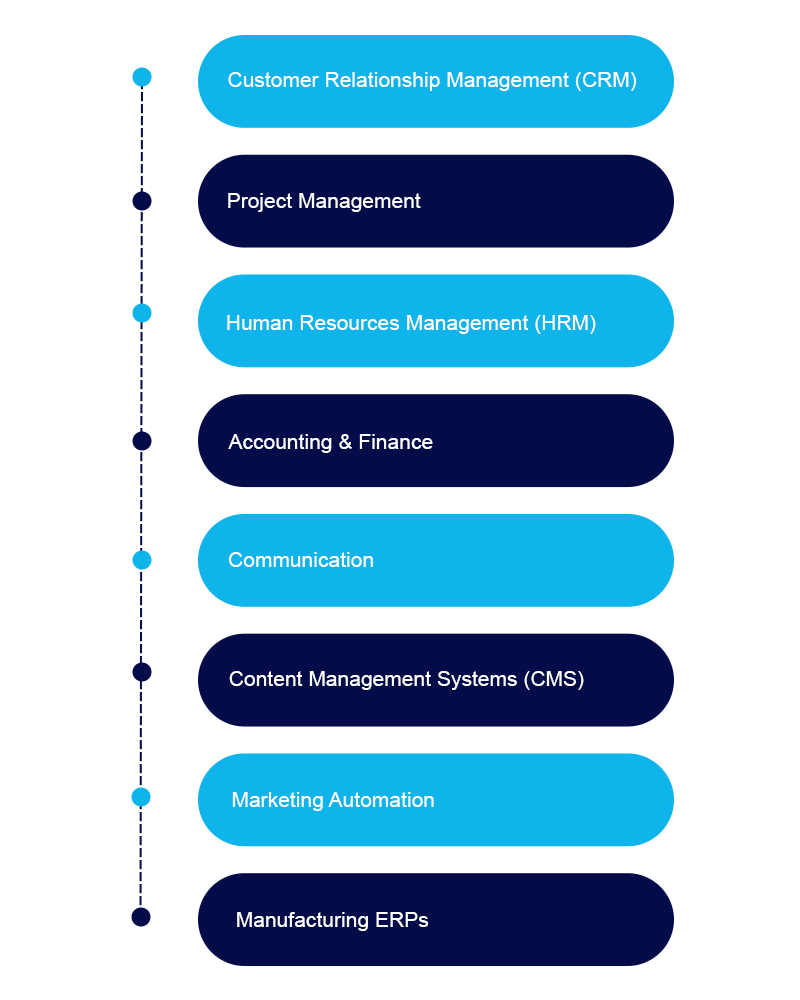
1. Core Business Functions (Horizontal SaaS)
These are tools that serve a function needed by almost every company, regardless of industry.
- Customer Relationship Management (CRM): Platforms like HubSpot or Salesforce that manage the client lifecycle, lead tracking, and sales pipelines.
- Project Management: Tools like Asana, Jira, or Trello that facilitate task management, scheduling, and team collaboration.
- Human Resources Management (HRM): Systems for payroll, benefits administration, and performance management.
- Accounting & Finance: Automating bookkeeping, invoicing, and financial reporting (e.g., QuickBooks Online, Xero).
- Communication: Collaboration hubs like Slack, Microsoft Teams, or Zoom that handle video conferencing and real-time messaging.
2. Industry-Specific Solutions (Vertical SaaS)
These are tailored to the unique workflows of a specific industry.
- Healthcare SaaS: EHR (Electronic Health Records) systems or telemedicine platforms.
- Real Estate SaaS: Property management software.
- Manufacturing ERPs: Systems that combine supply chain, inventory, and floor operations into a cohesive system.
3. Marketing & Content
- Content Management Systems (CMS): Platforms like WordPress (SaaS versions) or Wix that allow non-technical users to publish digital content.
- Marketing Automation: Tools for email marketing, lead nurturing, and customer segmentation (e.g., Mailchimp, Marketo).
Step-by-Step: How to Build a SaaS Product from Scratch
Developing a SaaS product is a scientific process. It requires a strategic blend of business acumen and engineering rigor. Below is the roadmap we utilize at XCEEDBD.COM to guide clients from concept to revenue.
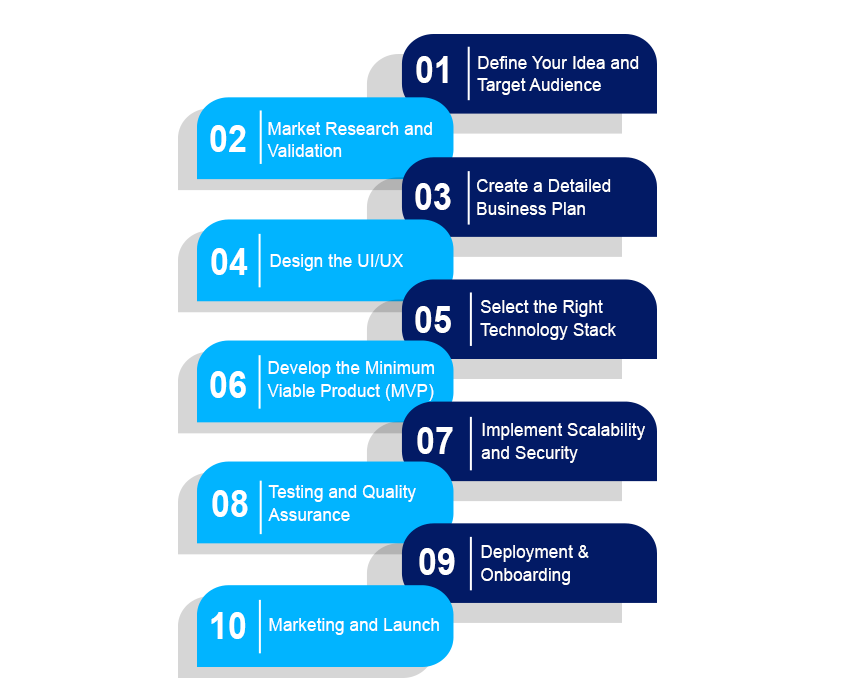
Phase 1: Strategy & Validation
Step 1: Define Your Idea and Target Audience
Do not build “software.” Build a solution to a problem.
- The Problem Statement: clearly articulate the pain point. Is it “Accounting is too slow for freelancers” or “Hospitals lose money on missed appointments”?
- The Audience: Define your Ideal Customer Profile (ICP). Are you targeting enterprise CTOs (B2B) or fitness enthusiasts (B2C)?
- Value Proposition: Why is your solution better than an Excel spreadsheet or the current dominant competitor?
Step 2: Market Research and Validation
Before writing a line of code, you must validate that people are willing to pay for this.
- Competitor Analysis: Look at G2, Capterra, and Trustpilot. Read the 1-star reviews of your competitors. That is your feature roadmap—fix what they are doing wrong.
- The “Smoke Test”: Create a simple landing page describing your product. Run a small Google Ads campaign driving traffic to it. If people click “Sign Up” (even if the product doesn’t exist yet), you have validation.
- Customer Interviews: Talk to 20 potential customers. If they don’t explicitly say “I would pay for that,” you may need to pivot.
Step 3: Create a Detailed Business Plan
You need a financial model.
- Monetization Strategy: Will you use Freemium (free basic tier), Tiered Pricing (Silver/Gold/Platinum), or Usage-Based Pricing (pay per API call)?
- CAC vs. LTV: Estimate your Customer Acquisition Cost (CAC) and Lifetime Value (LTV). In SaaS, LTV must be at least 3x your CAC for the business to be sustainable.
Phase 2: Design & Engineering
Step 4: Design the UI/UX
In SaaS, design is not decoration; it is function.
- Onboarding UX: The most critical part of your app is the first 5 minutes. If a user cannot figure out how to get value immediately, they will churn.
- Wireframing: Create low-fidelity sketches of the user flow.
- Prototyping: Build a clickable prototype (using Figma or Adobe XD) to test the workflow before development begins.
Step 5: Select the Right Technology Stack
Your tech stack determines your product’s performance, scalability, and hiring requirements.
- Frontend: React.js, Vue.js, or Angular are industry standards for building responsive, interactive dashboards.
- Backend: Node.js (for speed), Python/Django (for AI/Data heavy apps), or .NET (for enterprise environments).
- Database: PostgreSQL (relational data) vs. MongoDB (unstructured data).
- Cloud Provider: AWS, Google Cloud, or Azure.
Step 6: Develop the Minimum Viable Product (MVP)
The goal of the MVP is to enter the market fast.
- Core Features Only: Strip away “nice-to-have” features. Focus on the one or two features that solve the core problem.
- Agile Development: Work in 2-week sprints. Review progress constantly to ensure the build aligns with business goals.
Phase 3: Infrastructure & Security
Step 7: Implement Scalability and Security
SaaS clients trust you with their data. You cannot compromise here.
- Tenancy Models: Decide between Single-Tenant (greater security/customization, higher cost) or Multi-Tenant (lower cost, easier updates, shared resources). Most modern SaaS is Multi-Tenant.
- Encryption: Implement SSL/TLS for data in transit and AES-256 for data at rest.
- Compliance: Depending on your industry, ensure you are compliant with GDPR, HIPAA, or SOC2 standards.
Step 8: Testing and Quality Assurance
Bugs destroy trust.
- Automated Testing: Set up CI/CD pipelines (Continuous Integration/Continuous Deployment) to automatically test code before it goes live.
- Beta Testing: Release the product to a small group of trusted users. Their feedback is more valuable than any internal QA process.
Phase 4: Launch & Growth
Step 9: Deployment & Onboarding
- Zero-Downtime Deployment: Use containerization (Docker/Kubernetes) to update your app without kicking users off.
- Self-Service Onboarding: Build “wizards” or walkthroughs (using tools like Pendo or WalkMe) inside your app to teach users how to use it without calling support.
Step 10: Marketing and Launch
- Content Marketing: Write blogs that solve your customers’ problems.
- SaaS Directories: List your product on Product Hunt, Capterra, and G2.
- Email Automation: Set up drip campaigns to nurture leads who sign up for a free trial but haven’t converted to paid.
5 Common Mistakes to Avoid in SaaS App Development
Even with a great idea, execution errors can sink a SaaS startup. Based on our experience at XCEEDBD.COM, here are the top five pitfalls to avoid.
1. Building in a Vacuum (Ignoring Feedback)
The Mistake: spending 12 months building the “perfect” product without showing it to a single user. The Fix: Create a strong feedback loop. Launch early, even if it’s imperfect. Use tools like Canny or Trello boards to let users vote on the features they want next.
2. Underestimating Scalability
The Mistake: Building an app that works great for 100 users but crashes when 10,000 users log in. The Fix: Design for “stateless” architecture from day one. Use auto-scaling groups in your cloud environment so the infrastructure grows automatically with demand.
3. Neglecting Security Measures
The Mistake: Treating security as an afterthought. One data breach can end a SaaS company. The Fix: Incorporate “DevSecOps”—make security part of the development process, not a final check. Perform regular penetration testing.
4. Feature Creep (Overloading the App)
The Mistake: Trying to be everything to everyone. A cluttered interface confuses users and increases churn. The Fix: Be ruthless with your product roadmap. If a feature doesn’t directly support the primary use case, cut it. Simplicity is a feature.
5. Neglecting Maintenance and Technical Debt
The Mistake: Focusing only on new features and ignoring code cleanup. The Fix: Dedicate 20% of every development sprint to “refactoring” and fixing bugs. This prevents the codebase from becoming unmanageable.
Partnering with XCEEDBD.COM for Success
Deciding to build a SaaS product is a major commitment of time and resources. While the potential ROI is massive, the technical complexity can be overwhelming.
XCEEDBD.COM simplifies this journey.
We are not just a coding shop; we are your strategic product development partner. We help you navigate the “To Build or Not” decision with data-backed insights.
- Custom SaaS Development: tailored architectures that fit your specific business logic.
- Market-Ready MVPs: We focus on speed-to-market, getting you launched quickly so you can start generating revenue.
- Enterprise-Grade Security: We build with SOC2 and GDPR compliance in mind from the first line of code.
- Long-Term Partnership: We support you through post-launch maintenance, scaling, and feature iteration.
If you are unsure about the technical requirements or the roadmap for your new SaaS product, we can help clarify the picture.
Frequently Asked Questions (FAQ)
1. How long does it take to build a SaaS MVP?
Typically, a Minimum Viable Product (MVP) takes 3 to 6 months to develop. This timeline depends on the complexity of features and the clarity of the requirements. The goal is to launch quickly to gather user feedback.
2. What is the difference between Single-Tenant and Multi-Tenant architecture?
In Multi-Tenant architecture, all customers share the same infrastructure and database (segregated by software logic), which is cost-effective and easy to update. Single-Tenant gives each customer their own database and server, offering higher security and customization but at a much higher cost.
3. How much does it cost to develop a SaaS product?
Costs vary wildly based on scope. A simple MVP might cost between $25,000 and $50,000, while a complex enterprise solution can exceed $100,000+. It is best to consult with a development partner for a detailed estimate based on your specific feature set.
4. How do I protect my SaaS idea?
Execution is generally more important than the “idea.” However, you can protect your IP through NDAs (Non-Disclosure Agreements) with your developers and employees. You can also copyright your specific code and trademark your brand name.
5. What are the most profitable SaaS niches in 2026?
Vertical SaaS (industry-specific tools) and Micro-SaaS (solving very small, specific problems) are currently trending. Areas like AI-driven analytics, remote work collaboration tools, and healthcare compliance are seeing high growth.
Conclusion
To build or not to build? If you have a validated problem, a defined audience, and a vision for a recurring revenue model, the answer is likely yes.
SaaS product development offers a pathway to sustainable business growth, cost efficiency, and global impact. However, success requires more than just code—it requires a marriage of market insight, user-centric design, and robust engineering.
By following the roadmap outlined above—validating early, choosing the right stack, and prioritizing security—you can navigate the complexities of development and launch a product that users love.
Are you ready to turn your SaaS concept into a market-ready reality?
Book a Free Consultation with XCEEDBD.COM
Let’s discuss your idea, analyze the technical feasibility, and build a roadmap for your success. Don’t let technical hurdles hold you back.